17 Easy Nature Activities for Kids You Can Start Today
Easy nature activities for kids do not have to involve a long drive, specialist knowledge, or an entire afternoon of preparation. A backyard, local park, garden, or short walk around the neighborhood gives children plenty to investigate.
The easiest way to begin is with one small mission. Find three bird sounds. Look for something rough. Follow one ant. See what happens next.
Most of these activities use things you already have. A pencil, a container, or a magnifying glass is more than enough.
For more simple ideas close to home, explore our free backyard activities for kids.
Easy backyard nature activities for kids
Backyard nature activities can begin in a few minutes and work in gardens of almost any size. Children can investigate plants, listen for wildlife, study clouds, build with loose natural materials, or watch one small area change over time. The activity does not need a complicated outcome to hold their attention.
1. Go on a color hunt
Choose one color before heading outside. Ask your child to find as many natural examples of that color as possible.
Green is an easy place to start. Yellow, red, white, and purple make the search more challenging.
Look at flowers, leaves, stones, feathers, tree bark, berries, and moss. Children can point at each discovery, photograph it, or make a quick drawing.
For younger children, name the colors together. Older children can compare shades and create a color chart in a notebook.
2. Make a nature collection
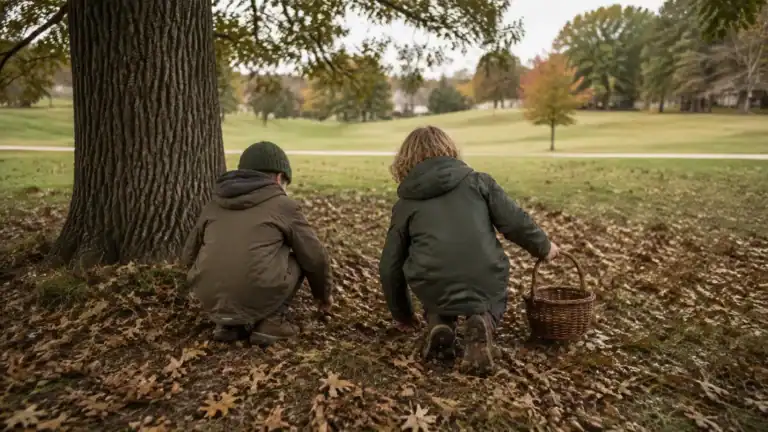
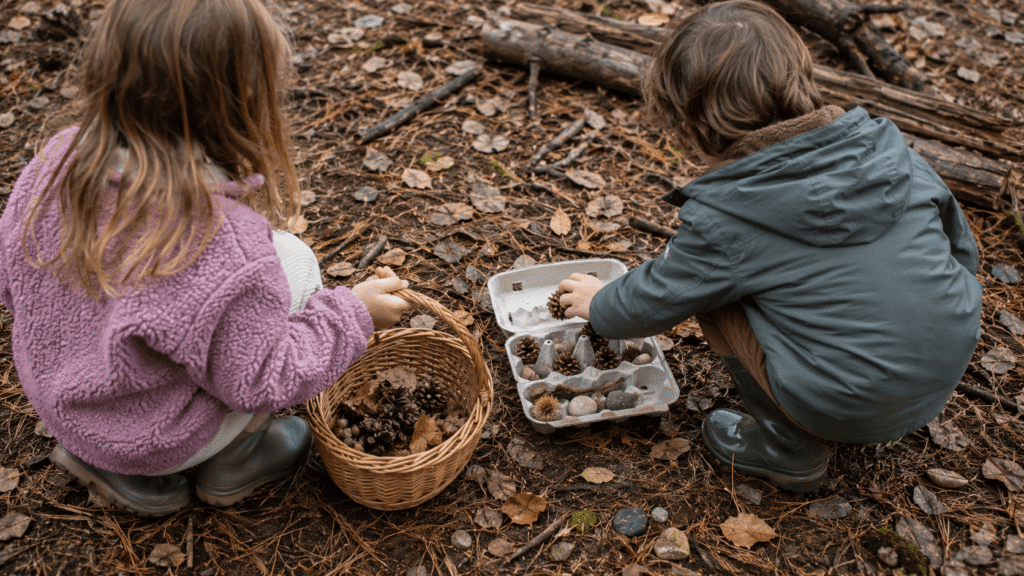
Give your child a small basket, paper bag, or empty egg carton. Let them collect safe, loose items from the ground.
Good options include fallen leaves, small sticks, pinecones, seed pods, and stones. Avoid picking living plants or collecting anything unfamiliar.
Sort the collection when you get home. Try organizing it by size, color, texture, weight, or shape.
There is no correct system. Figuring out how the objects belong together is part of the activity.
For busy weekday afternoons, try these quick outdoor activities for kids after school . Every idea takes less than 30 minutes.
3. Build a tiny creature home
Collect loose sticks, dry leaves, pieces of bark, grass, and stones. Use them to build a pretend home for a beetle, frog, mouse, or imaginary woodland creature.
Ask a few practical questions while your child builds:
Where will the creature sleep?
How will it stay dry?
Where will it find food?
How will it enter the home?
The result may be a tiny shelter, a full stick village, or a pile of leaves with a door. All three count.
Use loose materials and avoid pulling bark, moss, or living plants from their habitat.
4. Watch birds for ten minutes
Choose one comfortable place and stay there for ten minutes. A garden chair, window, blanket, or park bench all work.
Count how many birds appear. Notice where they land, how they move, what they eat, and which sounds they make.
Children do not need to identify every species. Descriptions such as “small brown bird with a long tail” are useful observations.
A pair ofkids binoculars can help older children study colors and movement. Younger children are often happy spotting birds with their eyes.
Turn the session into a simple game by looking for a bird on the ground, a bird in a tree, a bird making noise, and two birds together.
The printable bird bingo game gives children specific birds and behaviors to find. Print it before going outside and use markers, small stones, or a pencil to cover each square.
Outdoor activity printable
Printable Bird Bingo
Give children specific birds and behaviors to spot from the backyard, park, or window. Print it and start looking.
See the bird bingo printable →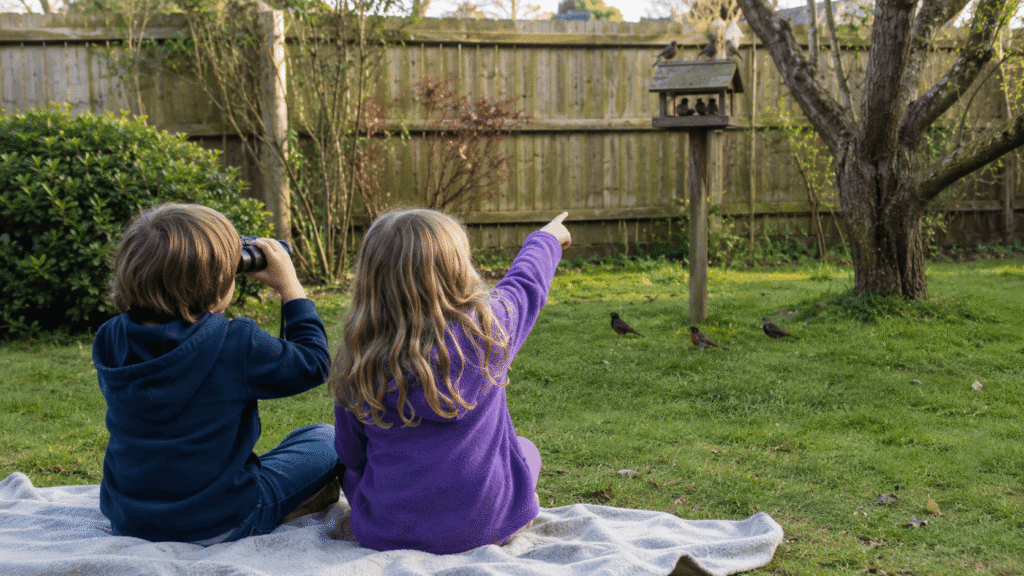
Simple observation activities for a nature walk
Observation activities give children a clear reason to slow down and look more closely. Try a listening walk, texture search, leaf comparison, or nature journal. These activities work in woodlands and parks, but they also work on sidewalks, shared paths, and around a single tree.
5. Take a listening walk
Walk slowly and stop every few minutes. Close your eyes for 30 seconds and count the sounds you hear.
Children might notice birds, buzzing insects, rustling leaves, footsteps, water, dogs, or traffic.
Ask which sound was closest. Which was furthest away? Which sound repeated? Which one was difficult to identify?
Older children can draw a sound map. Put an X in the middle of a page to represent where they are sitting. Add pictures or words around it to show where each sound came from.
6. Search for different textures
Choose a short route through the backyard, garden, or park. Look for safe natural surfaces with different textures.
Try finding something:
- Smooth
- Rough
- Soft
- Bumpy
- Dry
- Damp
- Hard
- Flaky
Compare tree bark, stones, leaves, soil, seed pods, and grass. Avoid touching unfamiliar plants, fungi, insects, or animal droppings.
A texture hunt is particularly useful when younger children lose interest in a regular walk. It gives their hands and eyes a job.
In fall, this gets even easier. These fall sensory activities for kids use crunchy leaves, cool stones, mud, wind and other seasonal textures for simple outdoor play.
7. Compare leaf shapes
Look for round leaves, narrow leaves, pointed leaves, tiny leaves, and leaves with jagged edges.
Compare fallen leaves without worrying about their names. Which leaf has the strongest veins? Which feels thickest? Which has the longest stem?
Use the leaves to make a line from smallest to largest. Try grouping them by color or shape.
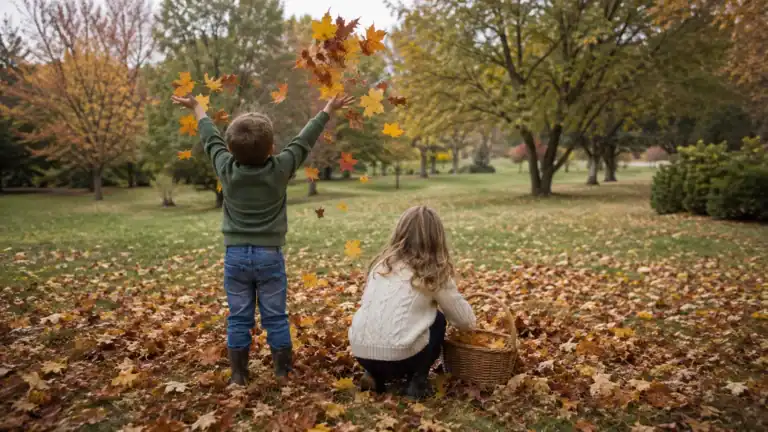
You can also place a leaf under a sheet of paper and rub over it with the side of a crayon. If leaves become the main attraction, these 20 things to do with fall leaves turn them into easy crafts, outdoor games, nature art and simple experiments.
For more seasonal ideas, explore fall outdoor activities for kids
If you prefer one bigger list to work through across the whole season, our fall bucket list for kids includes nature ideas, classic autumn outings and simple family traditions.
8. Track the weather
Choose one outdoor spot and observe it over several days. Record whether the day is sunny, cloudy, rainy, windy, warm, or cold.
Tie a short ribbon to a stick or branch to see which way the wind is moving. Place a straight-sided container outside to collect rain and measure it later.
Ask children to notice how weather changes the same place. Are the leaves moving? Is the soil dry? Are there puddles? Can they see shadows?
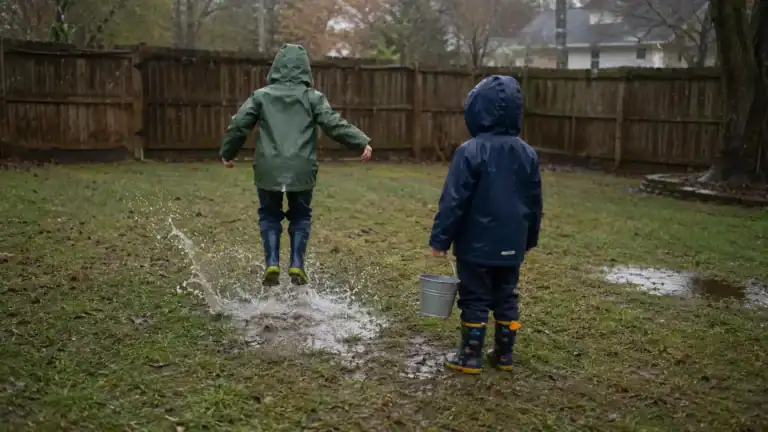
On properly wet days, our rain activities for kids turn those puddles, raindrops, worms, and tiny streams into 25 simple outdoor activities.
The printable weather scavenger hunt turns the observation into a ready-made search. Children can look for clouds, wind, sunshine, rain signs, and other everyday weather clues.
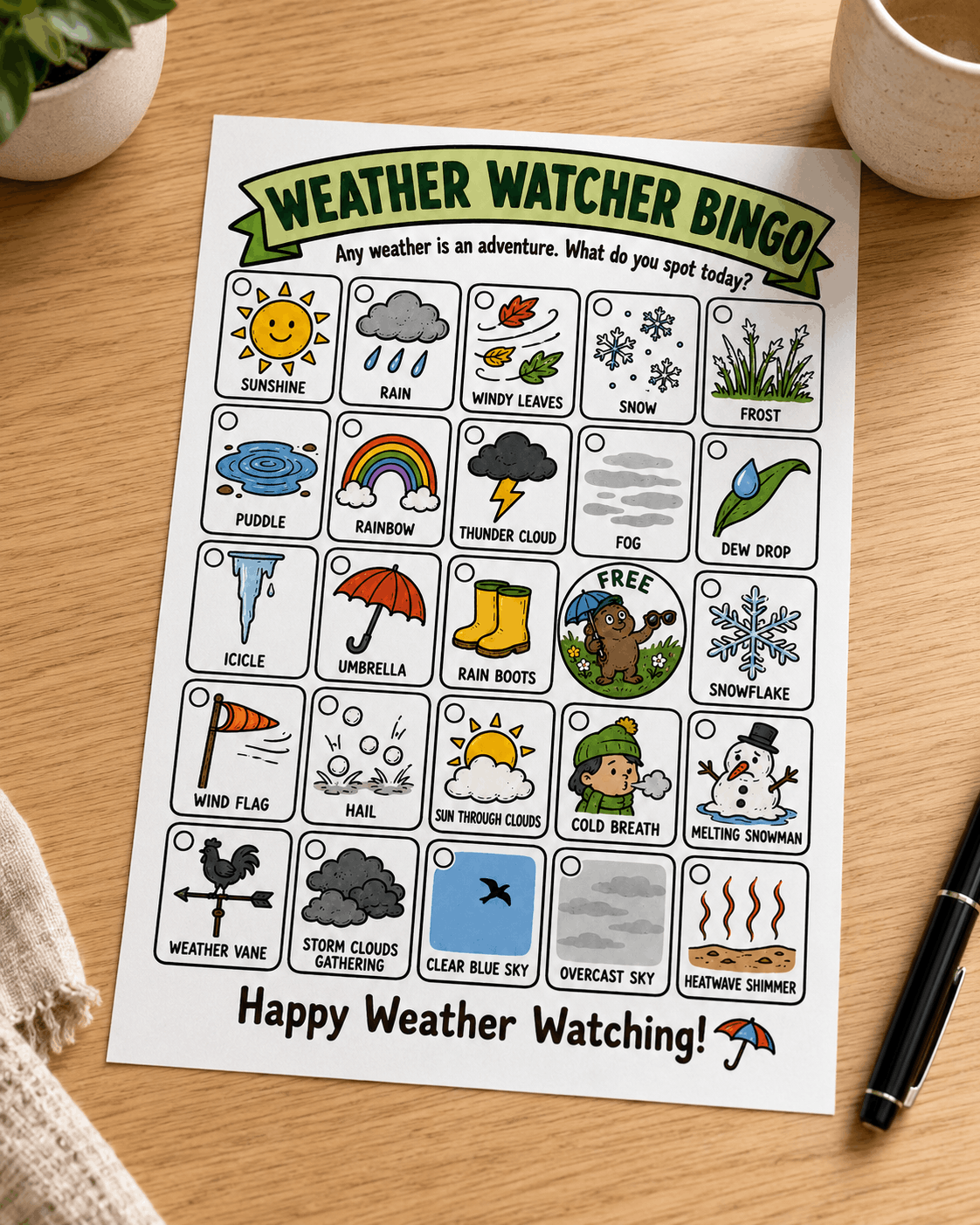
It also works well when the weather feels too ordinary for an outdoor activity. The sheet gives children a reason to look again.
Outdoor activity printable
Weather Scavenger Hunt
Turn clouds, wind, sunshine, and rain signs into a simple search children can complete close to home.
See the weather hunt →Creative activities using natural materials
Natural materials can become pictures, games, trails, and temporary sculptures. Use items that are already loose on the ground and return them afterward where practical. The finished creation does not need to come indoors. Photographing it before leaving often makes cleanup much easier.
9. Make nature faces
Arrange sticks, leaves, stones, grass, and seed pods into faces or characters.
A stone can become a nose. Curved sticks make eyebrows. Grass works as hair, and acorn caps make useful eyes.
Create the face on soil, pavement, a tree stump, or an outdoor table.
Try making different expressions. Can your child create a surprised face, a sleepy face, or a grumpy woodland creature?
Take a photograph before returning the materials.
10. Create a trail to follow
Use sticks, stones, or simple chalk arrows to create a short trail around the garden or park.
One person lays the trail. Everyone else follows it.
Add simple challenges along the route:
Hop to the next tree.
Find something yellow.
Listen for a bird.
Walk around the bench.
Touch something rough.
Keep the route visible and away from roads, water, steep ground, or thick vegetation.
11. Start a nature journal
A nature journal can be a proper notebook, a few sheets of folded paper, or a clipboard with blank pages.
Children can draw something they spotted, record the weather, count birds, trace a leaf, or write down one question.
There is no need to produce a polished page. A circle with six legs may be a complete record of the insect they found.
Try using the same journal during different seasons. Children can look back and notice which birds, insects, plants, and weather patterns have changed.
A simple blank nature journal can stay near the door with a pencil, ready for short walks.
12. Make pictures with mud
Mix clean garden soil with a little water in an old container. Use a stick, leaf stem, or old paintbrush to make marks on cardboard or pavement.
Experiment with the mixture. Thick mud creates dark, heavy marks. More water makes a lighter wash.
Children can paint tracks, leaves, animals, spirals, or an outdoor map.
Use soil from a safe area. Avoid ground that may contain animal waste, garden chemicals, glass, or other sharp debris.
Wildlife activities for curious kids
Wildlife activities work best when children observe rather than handle. Look for birds, insects, webs, tracks, holes, and signs of feeding. A small target list can help children stay focused without turning the activity into a lesson or requiring an adult to identify everything.
13. Look for signs of bugs
Instead of searching only for insects, look for evidence that they have been nearby.
Try finding:
A hole in a leaf
A spiderweb
A trail in the soil
A chewed edge
A cocoon
A small mound of earth
An insect visiting a flower
Look carefully under a loose stone or log, then place it back exactly as you found it.
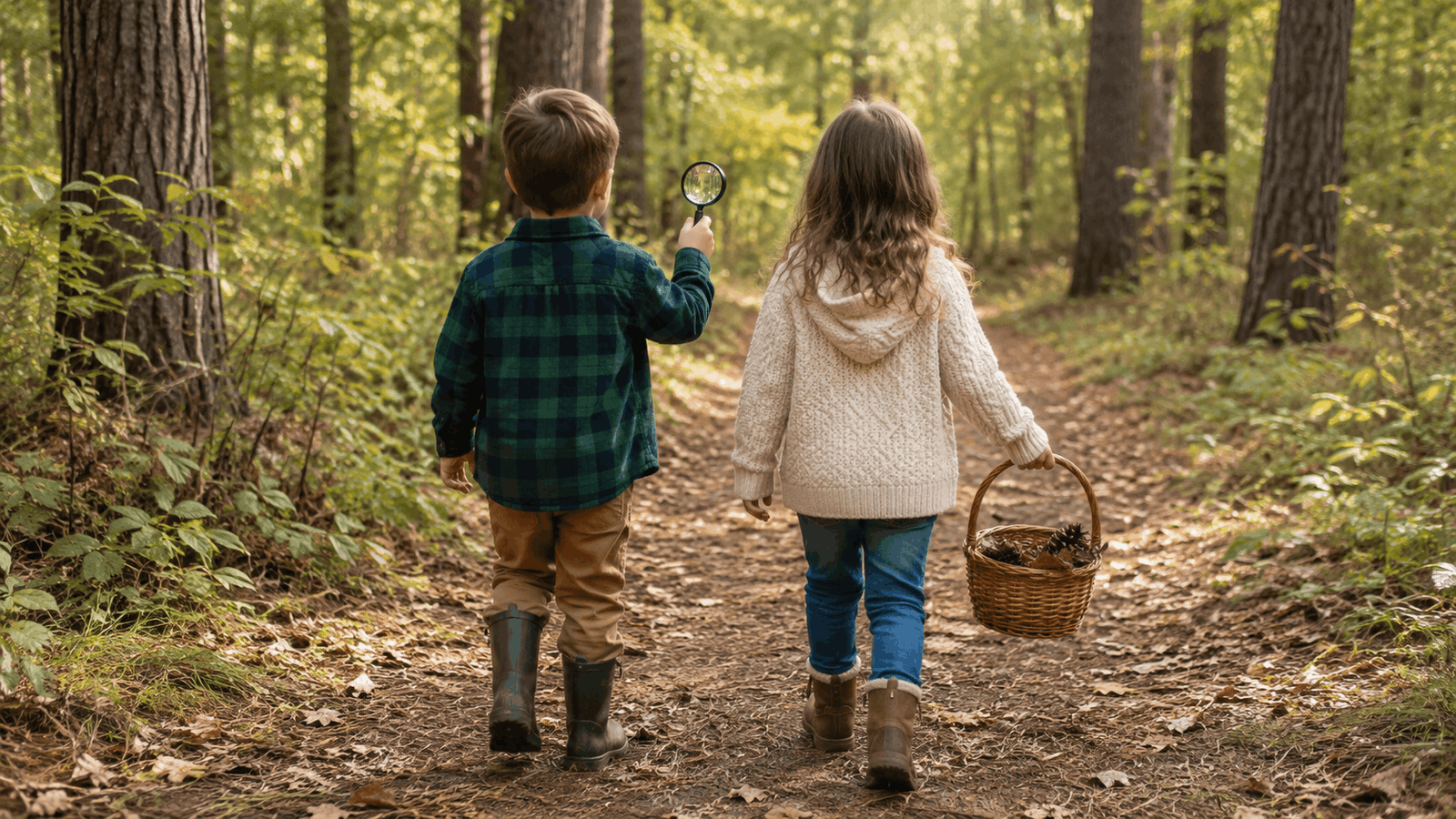
A child-safe magnifying glass helps children study wings, legs, patterns, and movement without touching the insect.
The printable bug scavenger hunt adds a list of specific bugs to search for. It works in gardens, parks, woodlands, and around flowering plants.
Outdoor activity printable
Bug Scavenger Hunt
Take the list into the garden, park, or woods and see how many small creatures your child can find.
See the bug hunt printable →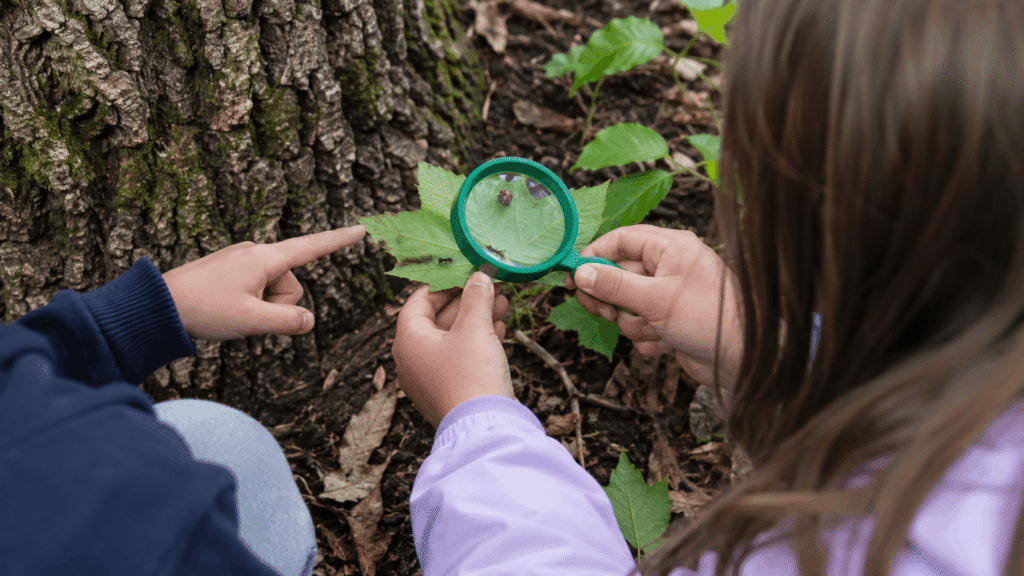
14. Follow one ant
Find an ant and follow it without touching or blocking it.
Where is it going? Is it carrying anything? Does it meet other ants? Can your child find the trail it is following?
This activity might last two minutes or twenty. Let the ant decide.
Older children can mark the ant’s route in a notebook or estimate how far it traveled.
15. Look for animal tracks and trails
Mud, sand, snow, and soft soil can preserve signs that an animal has passed through.
Search for footprints, tail marks, small holes, feathers, nibbled seeds, paths through grass, or scratched bark.
Do not worry if you cannot identify the animal. Start with what you can see.
How many toes are visible? Which direction was it moving? Are there several prints or only one? Is the track larger than your child’s hand?
Take a photograph and compare it with a local wildlife guide later.
Longer nature activities and outdoor challenges
Longer nature activities give children something to revisit over several days or outings. Growing a seed, tracking one tree, completing a scavenger hunt, or working through an outdoor badge log creates a simple structure without requiring every session to be planned from scratch.
16. Grow one easy seed
Start with one container and a fast-growing seed. Beans, peas, sunflowers, cress, and radishes all give children visible changes to watch.
Let your child fill the container, plant the seed, add water, and choose a suitable place for it.
Check it regularly. Measure the shoot, count the leaves, or draw the plant once a week.
A small set of kids gardening tools can make digging and watering easier, but a spoon and reused cup also work.
The small scale matters. One plant is easier to care for and more interesting to follow than a large project that quickly becomes another job.
More ways to explore close to home
Turn seeds, soil, bugs, plants, and watering into simple outdoor activities kids can start right in the garden.
Explore gardening activities →17. Complete an outdoor explorer challenge
Choose a theme and complete several small outdoor missions over a week, month, or season.
A bug challenge might include finding a web, watching a pollinator, spotting an insect with wings, and drawing a beetle.
A hiking challenge might involve packing a small bag, following trail markers, climbing a hill, and recording the route.
The missions give children a reason to return outside without repeating the same activity every time.
The outdoor scavenger hunt and badge log bundle combines six themed badge logs for hiking, camping, bug hunting, beachcombing, forest exploring, and backyard gardening.
Each theme contains practical challenges children can complete over time. It works well for families who want more than a one-day activity but still prefer a clear starting point.
Six outdoor challenges
Outdoor Badge Log Bundle
Six printable challenge logs covering hiking, camping, bugs, beaches, forests, and backyard gardening.
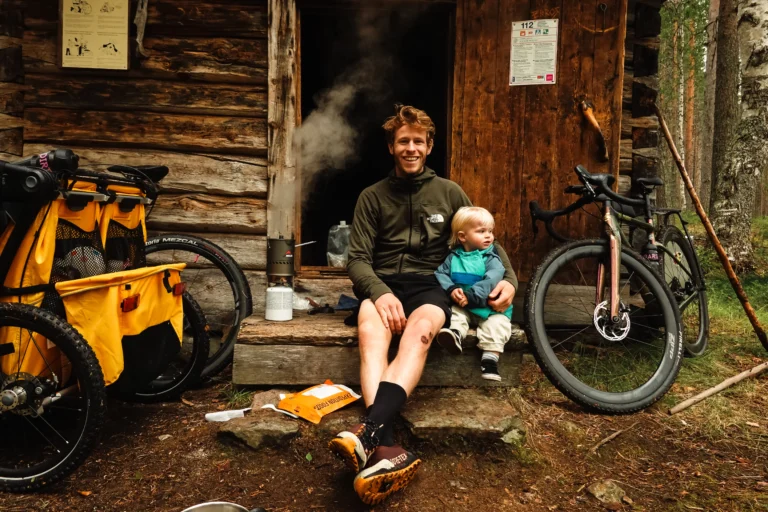
See the complete bundle →For a larger family adventure, read about our family bikepacking adventure in Finland.
How do you keep nature activities easy?
Keep it small: One mission, one container, or one printed sheet is enough. Let the interesting thing they find decide what happens next.
Keep nature activities easy by choosing one simple mission, bringing very little equipment, and leaving room for the plan to change. Ten focused minutes can work better than a complicated afternoon. When children stop to investigate something unexpected, follow their interest instead of rushing back to the original activity.
Here is what works:
Choose one idea at a time.
Start close to home.
Use a short list for younger children.
Bring water and weather-appropriate clothing.
Let children observe without identifying everything.
Stop before everyone is tired.
A leaf hunt may turn into an ant investigation. Birdwatching may become cloud watching. That is not the activity going wrong. It means something outside caught their attention.
For an overnight version of outdoor play, try these backyard camping ideas for kids
Good to Know
Frequently Asked Questions About Nature Activities for Kids
Nature activities can work almost anywhere, from a backyard to a local park or neighborhood walk. These answers cover simple ideas, what to bring, what kids can collect, and how to keep outdoor exploration easy.
Start with one small mission
Pick one activity and try it close to home.
Find three bird sounds. Follow one ant. Look for five leaf shapes. Plant one seed.
That is enough.
The goal is not to fill every minute or turn the outdoors into another lesson. Give children a reason to look closely, then see where they take it.
Find more outdoor activities for kids for simple ideas throughout the year.