Fall Nature Scavenger Hunt for Kids: 12 Easy Ideas
A fall nature scavenger hunt for kids turns a short walk into a search for leaves, seed pods, webs, and other things already outside. Start with five things to spot, then choose one of the 12 ideas below for your backyard, local park, or neighborhood path.
You will find a ready-to-copy fall scavenger hunt list, simple picture prompts for younger children, and challenges for older kids. Most versions need only a pencil and scrap paper. Pointing at a find counts, so nobody needs to bring home a bag of treasures.
Five finds, one small area, ten minutes. Choose a leaf, a seed pod, rough bark, a web, and something moving in the wind. Swap anything that is missing and finish when the interest runs out.
How do you set up a fall nature scavenger hunt?
Choose a familiar outdoor space, make a short list of things actually visible there, and decide how children will record each find. They can point, draw, check a box, or take a photo. Set a clear boundary and explore together. A short loop or one tree is enough to begin.
- Take a quick look first. Choose likely finds instead of sending everyone after an acorn where there are no oak trees.
- Pick five prompts from the list below. Draw simple pictures if your child is not reading yet.
- Bring a pencil and paper if you want a record. Comfortable shoes and clothing for the weather matter more than special equipment.
- Agree where the hunt ends, such as the bench or the end of the garden. Stay together instead of making it a race.
- Let a surprising discovery change the plan. A bird landing nearby can replace an item nobody can find.
For a backyard scavenger hunt, search from the patio to one tree. At a park, use the edge of a familiar path. Choose a firm, accessible route and put prompts within comfortable view if children are joining from a stroller, wheelchair, or seated spot.
Good to know: Make this a looking game first. Leave wildlife, nests, webs, feathers, fungi, and unfamiliar plants undisturbed. Do not taste finds. Small acorns and seeds can cause choking, so keep them away from young children and anyone who mouths objects. Collect only a few common fallen items where permitted.
A fall scavenger hunt list you can copy
A useful fall scavenger hunt list mixes easy objects with details children need to look for. Try a curled leaf, a seed pod, a web, or grass moving in the wind. Choose five of these nine prompts for a short outing, or use the whole list when everyone wants a longer search.
FALL NATURE HUNT: CHOOSE FIVE
Copy the prompts onto scrap paper and add an empty box beside each one. For a picture list, sketch a leaf, tree, bird, web, and cloud. The drawings only need to remind your child what to look for; an adult can read the details aloud.
Fall looks different from place to place. If your trees stay green, search for dry seed heads, fallen needles, wind, or changes after rain. If the ground is dry, replace the damp patch with a shadow. There is no need to wait for red leaves.
Easy fall scavenger hunt ideas: colors, shapes, and tiny finds
Start with things children can recognize without naming a species. Color, shape, size, and simple contrasts give the hunt a clear purpose. These first four nature scavenger hunt ideas for kids work around a single tree or along a short path, with room to make each prompt easier or harder.
1. Follow one fall color
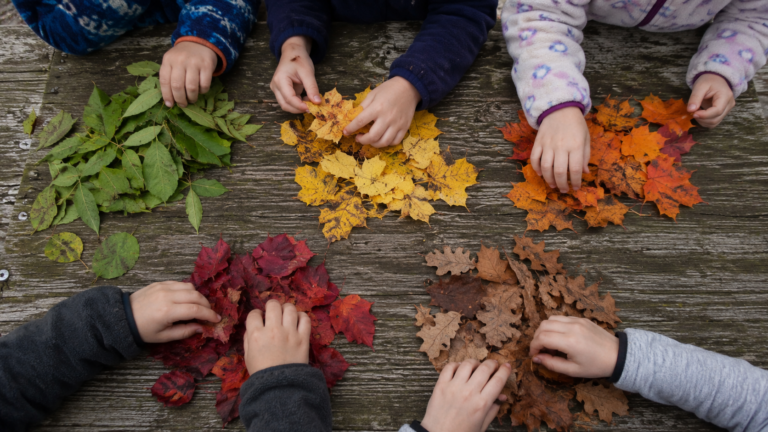
Choose a color you can already see, such as yellow or brown. Find three natural examples: a leaf on the ground, a patch of bark, and a dry grass stem might work. Point to each one before moving on.
For an extra challenge, look for three shades of the same color. Ask which is palest or darkest. Children who prefer a simpler start can keep searching for the same color with no counting involved.
2. Hunt for leaf shapes
Look for a narrow leaf, a wide leaf, and one with an uneven edge. Compare them where they lie, or hold up a few fallen leaves where collecting is allowed. Choose one feature at a time so the hunt stays easy to follow.
Older children can sketch the outlines and invent names for the shapes. Keep a favorite outline to compare with the next leaf you spot.
If your child wants to keep exploring the leaves they found, these leaf activities for kids include sorting games, leaf rubbings, and simple nature art.
3. Spot tiny treasures under a tree
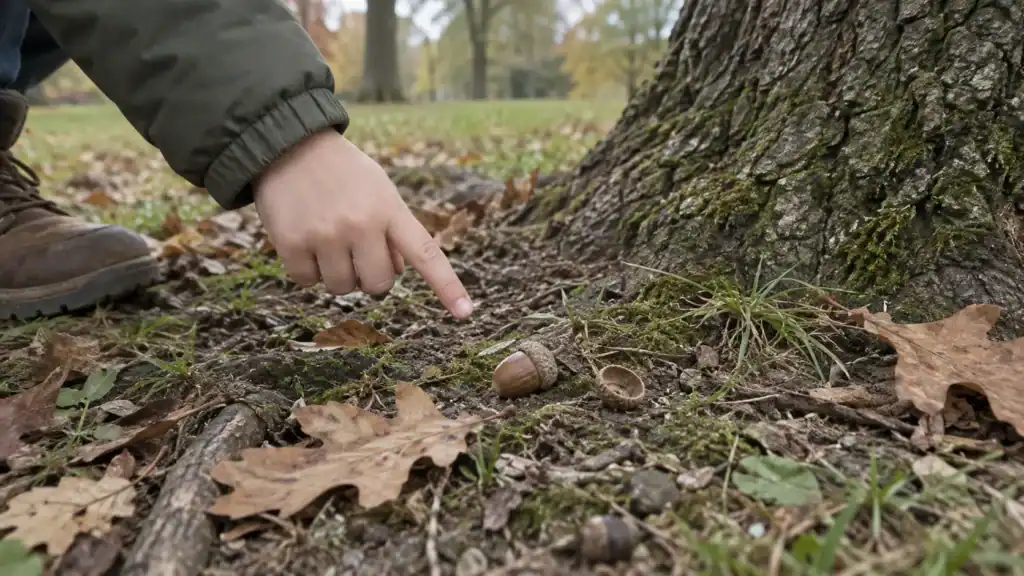
Under an oak, search for a capped acorn, an uncapped acorn, and an empty cap. Around another tree, use the seeds or cones that are actually there. Point to the differences rather than gathering a large collection.
For older children who can handle small objects appropriately, a few permitted finds can lead into these acorn sorting and play ideas. Younger siblings can be the spotters while an adult handles any small pieces.
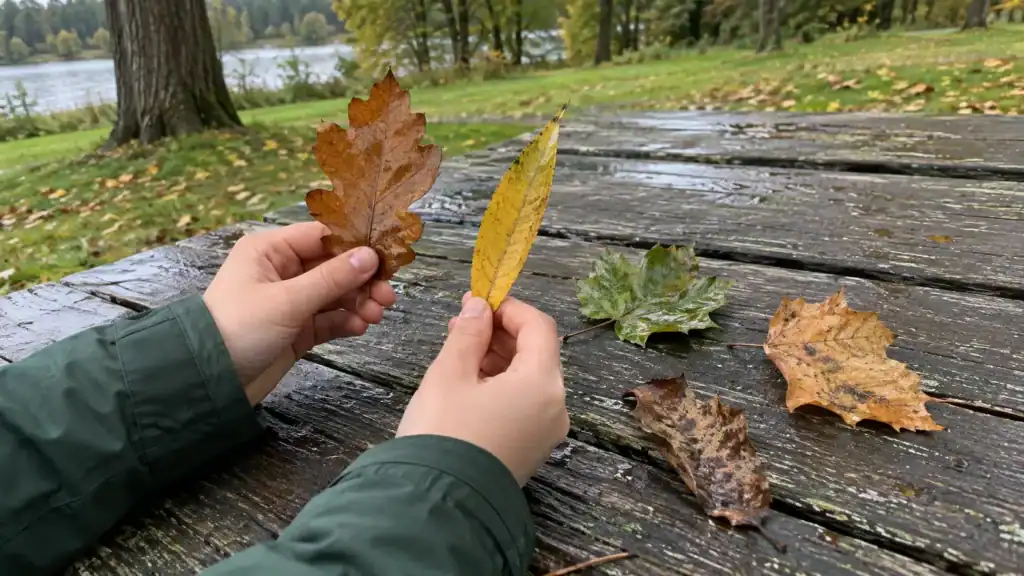
4. Find opposite pairs
Ask for a long leaf and a short leaf, a straight twig and a bent twig, or a pale patch of bark and a dark one. Compare both before choosing another pair. A single find can belong in more than one round.
Let your child set the next challenge. If “smooth and rough” is too abstract, begin with “big and little.” You can compare by sight without touching unfamiliar surfaces.
Nature walk scavenger hunt ideas: weather and wildlife
A nature walk scavenger hunt can include things to hear or watch as well as objects to find. These four versions use wind, rain clues, webs, and movement. Stop in a safe place to observe, keep wildlife undisturbed, and describe what happened without needing to identify every animal or plant.
5. Listen for a fall sound trio
Pause beside a tree and listen for three sounds: leaves rustling, a bird calling, or your own steps on the path. On a quiet day, compare footsteps over grass and fallen leaves. Choose sounds you can reach without leaving your route.
Draw one mark for each sound, or describe it aloud. Let your child choose whether to follow a sound or stay still and listen again. For more activities built around crunchy leaves, rough bark, and outdoor sounds, try these fall sensory activities for kids
6. Become a wind detective
Find three things moving in the breeze. A loose leaf, a grass stem, and a branch may all move differently. Stand still and watch which starts first, which keeps moving, and which barely shifts.
Try the same challenge in a sheltered part of the garden. A still day can become a search for things the wind has already moved, such as a leaf caught beside a fence. Save this game for ordinary breezes, not stormy conditions.
7. Search for clues after rain
Once conditions are safe, look for droplets on a leaf, a dark patch of soil, and a reflection in a shallow puddle. Record one thing that looks different when wet. Keep shoes on the path if the edges are slippery.
You can complete the whole hunt by looking. Avoid roadside water, drains, and moving water. If it has not rained, search for dry clues instead: curled leaves, dusty soil, and crisp grass stems.
If the puddles become more interesting than the checklist, these rain activities for kids offer simple ways to explore water, mud, and wet leaves.
8. Take a leave-it-there photo hunt
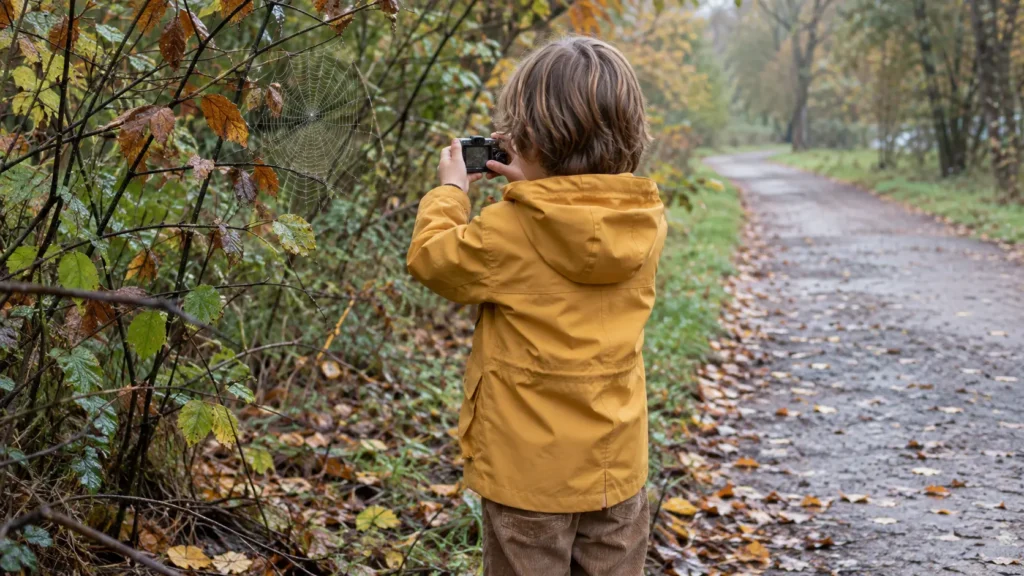
Choose three subjects to photograph: a web, an interesting leaf, and a tree with changing colors. A child can frame the picture while an adult holds the camera, or older children can take turns using one. Stop walking before taking each shot.
Leave everything in place. At the end, choose one photo and explain what made it worth noticing. There is no need to share the pictures online or photograph other people along the path.
Four ways to make the same hunt feel different
Change the rules before adding more items. Simple clues, a drawing challenge, a return visit, or shared roles can give a familiar route a new purpose. These versions suit children who want more involvement than checking boxes, and they use the same everyday outdoor spaces as the simpler hunts.
9. Give clues instead of object names
Try “I fell from a tree and curl at the edges” or “You can see through me, but I catch tiny things.” Accept any answer that fits, then ask your child to explain it. A curled leaf and a web are possible answers.
Keep clues tied to things nearby. Children can make the next clue while you guess. Younger participants can choose between two objects you point out instead of solving a spoken riddle.
10. Make a three-sketch nature journal
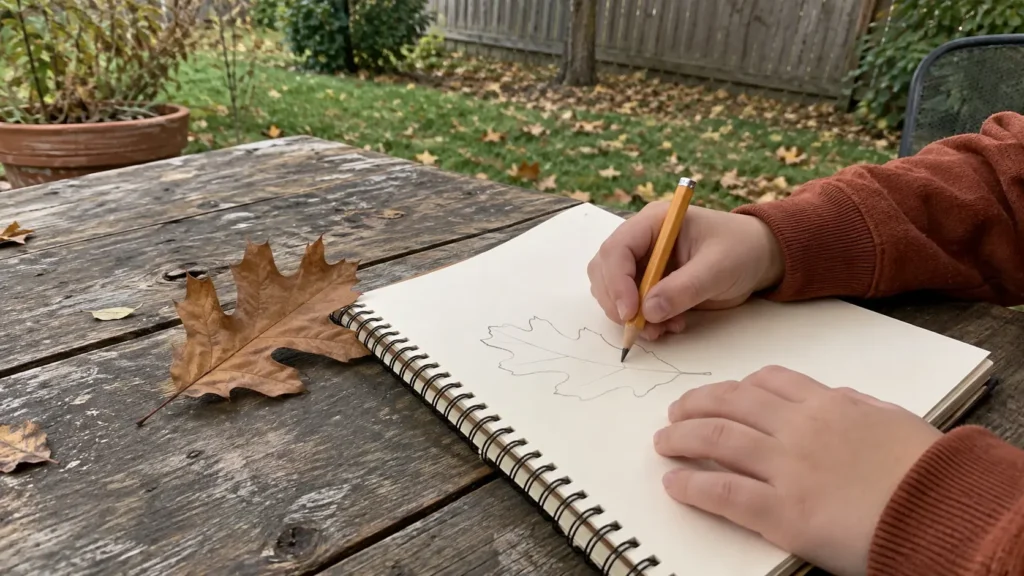
Fold scrap paper into three sections. Find and draw one shape, one pattern, and one sign of the season. A leaf outline, bark lines, and a bare twig are enough. Sit at a bench or outdoor table if drawing while standing becomes awkward.
Add a date if you want to compare pages later. Let younger children dictate one observation while an adult writes it down. Keep the drawing loose; this is a record of what caught their attention. For your next journal page, these easy nature activities for kids offer more things to observe, from birds and insects to changing weather.
11. Revisit one tree
Choose a tree you pass regularly. On the first visit, notice the leaves still attached, what lies underneath, and any visible seeds. Return a week or two later and search for one difference. A quick drawing or photo can help with the comparison.
If little has changed, record that too. Weather and local tree species set the pace. This autumn scavenger hunt works as a short repeat activity rather than a challenge to finish everything in one afternoon.
12. Build a family team hunt
Give everyone a role: one person spots, another checks the list, and another chooses the next prompt. Switch after each find. Younger children can lead with an easy color while older children explain a pattern or draw a detail.
Use one shared list and a clear boundary. If interest fades, let each person choose a final discovery. If everyone still wants to stay outside, choose another game or small adventure from these fall outdoor activities for kids.
How to adapt the hunt for toddlers, preschoolers, and older kids
Adjust the number of prompts and how children respond before changing the whole activity. Toddlers can point to one obvious object at a time. Preschoolers can use pictures or a short checklist. Older kids can solve clues, compare finds, or document changes. Treat these as starting options, not age requirements.
- Toddlers: try two or three visible targets, such as a tree, a large leaf, and a bird. Stay close and keep small objects out of reach.
- Preschoolers: offer four or five picture prompts. Name each together, then let your child point or make a mark beside it.
- Older kids: add a comparison, riddle, photo, or sketch. Let them design part of the list after checking what is nearby.
- Mixed ages: share the hunt and give the same find different jobs. One child spots the leaf; another notices its edge or counts its points.
Keep an extra blank space for “something I chose.” That gives children a place for the discovery the list did not predict. If the paper becomes a distraction, put it away and carry on with one spoken prompt.
Turn today’s hunt into your next fall outing
Choose one version for today and leave the rest for later. If your child enjoyed having a small mission, use that as the starting point for another afternoon outside. There is no need to plan the whole season at once.
Print + Go
Fall Bucket List Printable
Want more seasonal ideas after today’s nature hunt? Our Little Mud Club fall bucket list gives your family a printable place to choose the next activity. Keep it handy and pick something that fits the day.
View our Fall Bucket List on Etsy →For more ideas before choosing, browse our fall bucket list ideas for kids. Pick one small outing or something worth repeating, based on what your family enjoyed today.
Good to Know
Fall Nature Scavenger Hunt FAQs
Practical answers for a short outing, a homemade list, and children with different ways of joining in.
What do you put on a fall nature scavenger hunt list?
Use things children can realistically spot nearby: fallen leaves, seed pods, rough bark, webs, birds, and signs of wind or rain. Choose five prompts first and replace any item that does not fit your local surroundings.
How do you do a fall scavenger hunt with preschoolers?
Draw four or five simple picture prompts and explain them before starting. Explore a small area together. Preschoolers can point to a find, check a box, or describe it while an adult records the answer.
Can you do a nature scavenger hunt without a printable?
Yes. Read a few prompts aloud or copy them onto scrap paper. Children can remember one target at a time. A printable is optional, and the hunt works without a basket, clipboard, or special equipment.
How long should a fall scavenger hunt take?
Try about ten minutes for a first outing, then follow your child’s interest. Use fewer prompts when time is short. A longer walk can include several pauses, but there is no need to finish every item.
Do children have to collect the things they find?
No. Pointing, sketching, or photographing a find all count. Leave wildlife, webs, nests, fungi, and unfamiliar plants undisturbed. If collecting is permitted, take only a few common fallen items and keep small pieces away from young children.
What if there are no colorful fall leaves where we live?
Look for local changes such as dry seed heads, fallen needles, wind, or wet ground after rain. Green leaves work for shape hunts too. Adapt the list to your climate instead of waiting for a particular autumn scene.
Start with five things to spot on your next short walk. Let your child choose the final find, then keep one photo, sketch, or story if they want a record. Leave the rest for another day. The same path can give you a different hunt next week.
Keep Exploring
More simple outdoor ideas to try close to home
Follow today’s nature hunt with a backyard game, a small gardening project, or some muddy pretend play.
Print. Go outside. Repeat. 🌿