Mud Kitchen Ideas for Kids: How to Set One Up + 12 Easy Play Ideas
The best mud kitchen ideas for kids usually start with the simplest ingredients: dirt, water, old kitchen tools, and permission to make a mess.
A mud kitchen does not have to be a wooden play kitchen with a working sink. An old table, a few bowls, and a patch of backyard dirt can keep the whole thing going.
It also fits easily alongside other backyard activities for kids because kids can return to it without needing a new activity planned every time.
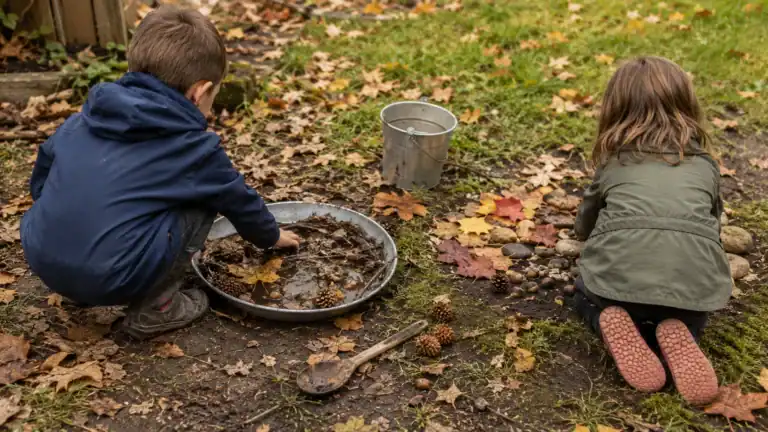
Start with four things: dirt, water, one old bowl, and a spoon. That is already a mud kitchen. Add shelves, pots, flowers, and extra tools later if the kids keep coming back to it.
What Is a Mud Kitchen and What Do Kids Need?
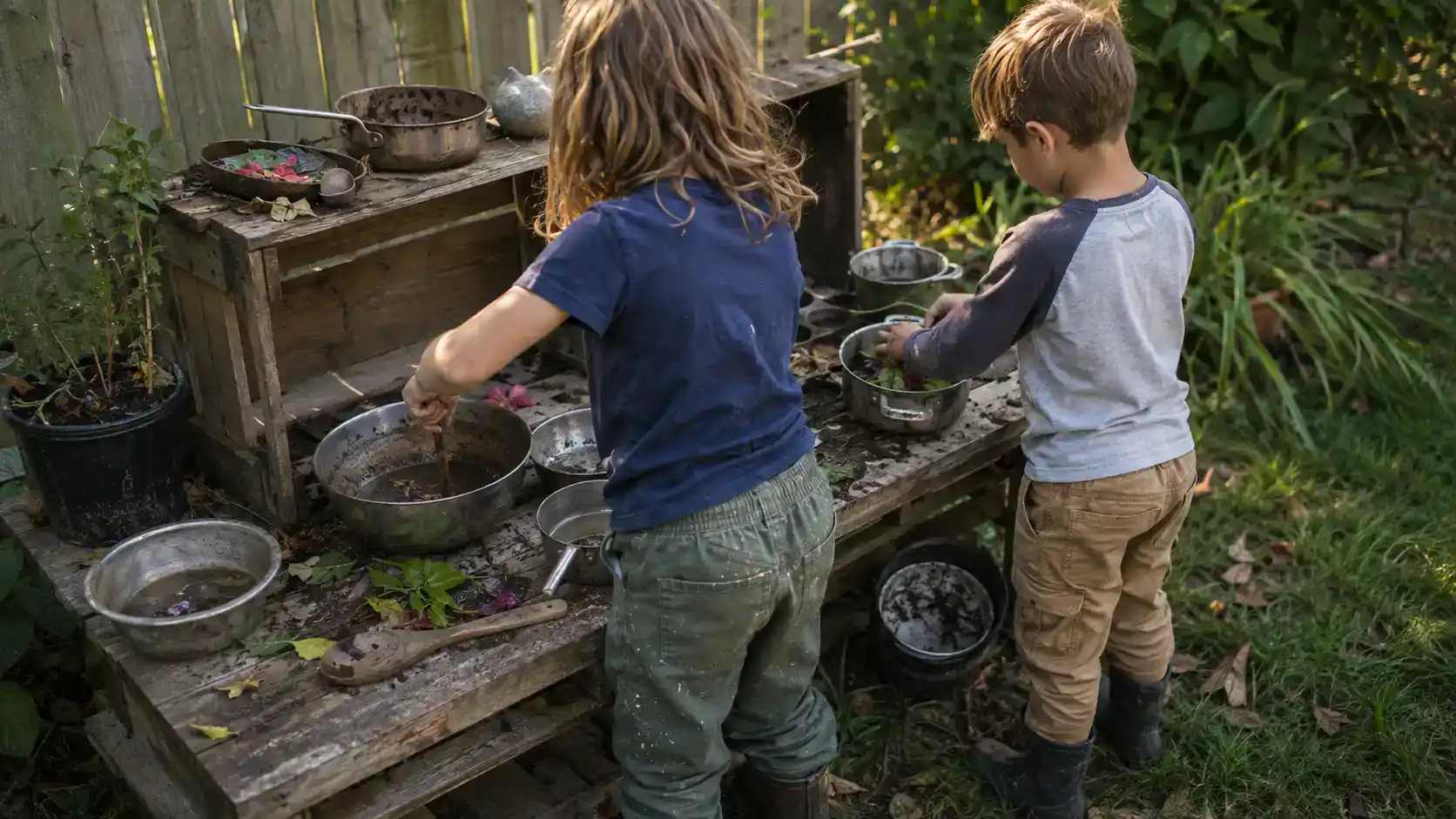
A mud kitchen is an outdoor play space where kids mix soil, water, leaves, flowers, stones, and other natural materials using old kitchen tools. A basic setup only needs a work surface, dirt, water, several containers, and something for stirring or scooping. Everything else can be added over time.
Think of it more as an outdoor workbench than a toy kitchen.
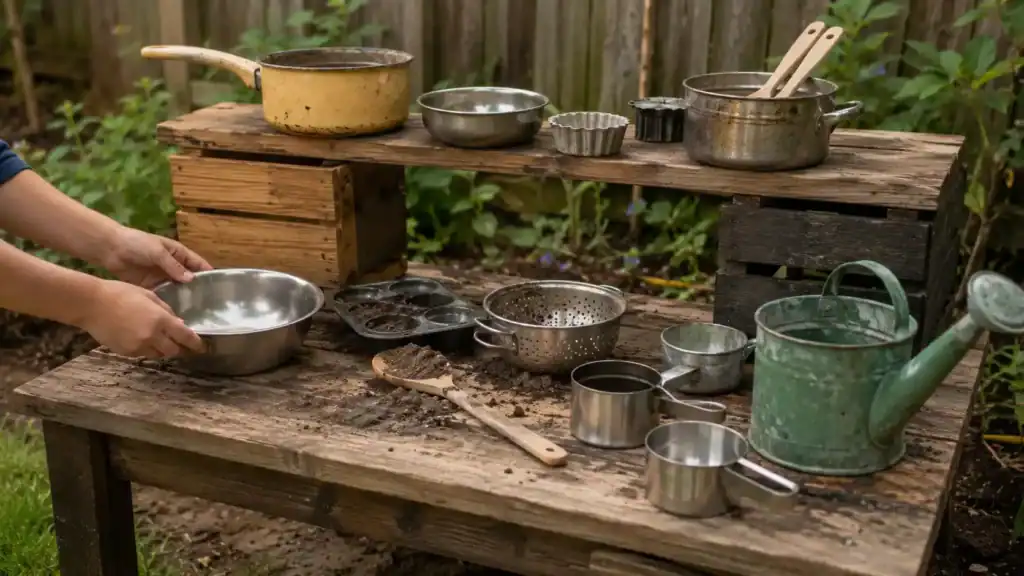
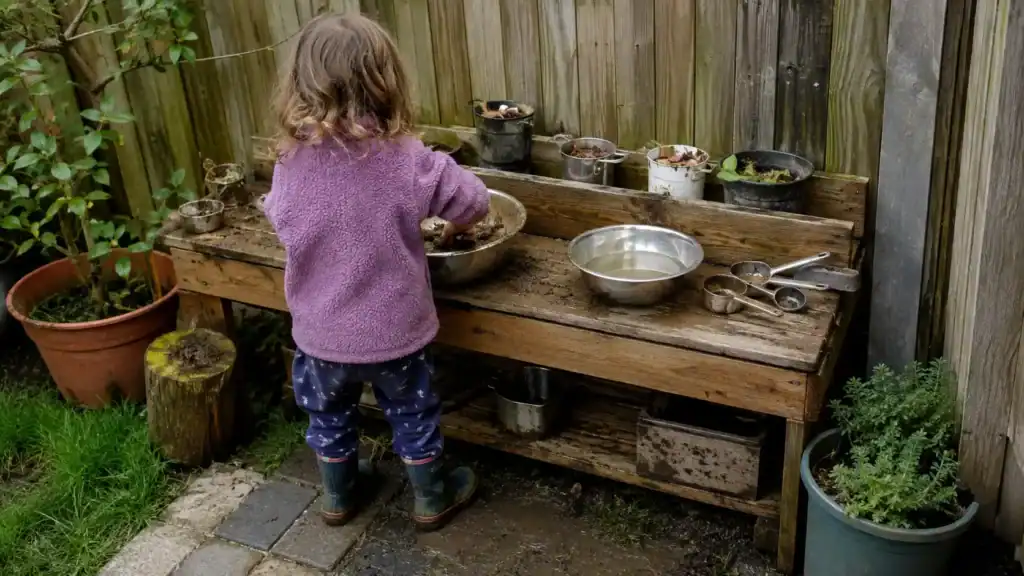
A low table is useful, but sturdy crates, an old bench, a tree stump, or even paving stones can work. Add a few old bowls, pots, spoons, muffin tins, or measuring cups.
Avoid breakable glass and anything sharp. Beyond that, mismatched is perfect.
Keep dirt or soil nearby and give kids some way to add small amounts of water. A watering can, bucket, jug, or recycled bottle works well.
That basic combination creates plenty of sensory play outside without requiring a complicated setup.
How Do You Make a Simple DIY Mud Kitchen?
A simple DIY mud kitchen starts with a child-height surface in a spot where spilled water and dirt are not a problem. Add old kitchen equipment, access to soil, and a small water source. There is no need to build plumbing, install a sink, or buy matching accessories before kids can start playing.
1. Pick the mess-friendly spot
Choose somewhere that can handle water, mud, and the occasional abandoned saucepan.
Grass, patio edges, a garden corner, or an area beside a shed all work. Some shade makes longer summer play more comfortable.
2. Add a work surface
Use what is already available.
An old outdoor table is ideal. Wooden crates with a plank across the top also work. For a smaller mud kitchen backyard setup, one crate and a large tray may be enough.
3. Give them dirt and water
Keep a tub, garden patch, or bucket of ordinary soil nearby.
Water does not need to run from a tap. A small filled watering can often works better because kids control the pouring themselves.
Rainy weather makes the setup even easier. These outdoor rain activities for kids add puddle play, rainwater experiments, worm hunts, and more muddy ideas for wet days.
4. Raid the old kitchen drawer
Wooden spoons, whisks, ladles, muffin tins, pans, measuring cups, sieves, and plastic containers are all useful.
There is no need for a complete set. The odd collection is part of the fun.
5. Add natural ingredients
Leaves, petals, herbs, sticks, pinecones, grass, seeds, and small stones change what kids can make.
If the garden itself is becoming part of the game, these gardening activities for kids give them a few more jobs to do outside. The Garden Scavenger Hunt also works well when they want to hunt for ingredients before heading back to the kitchen.
Mud + water + old kitchen tools + backyard finds.
That is enough for pies, soups, potions, cafés, bakeries, and whatever else turns up on today’s menu.
What Can You Put in a Mud Kitchen?
Good mud kitchen supplies fall into three groups: tools for mixing, containers for holding things, and natural ingredients kids can collect themselves. Old kitchen equipment works especially well because pouring, scooping, whisking, measuring, and transferring materials create different ways to play without needing a different activity every day.
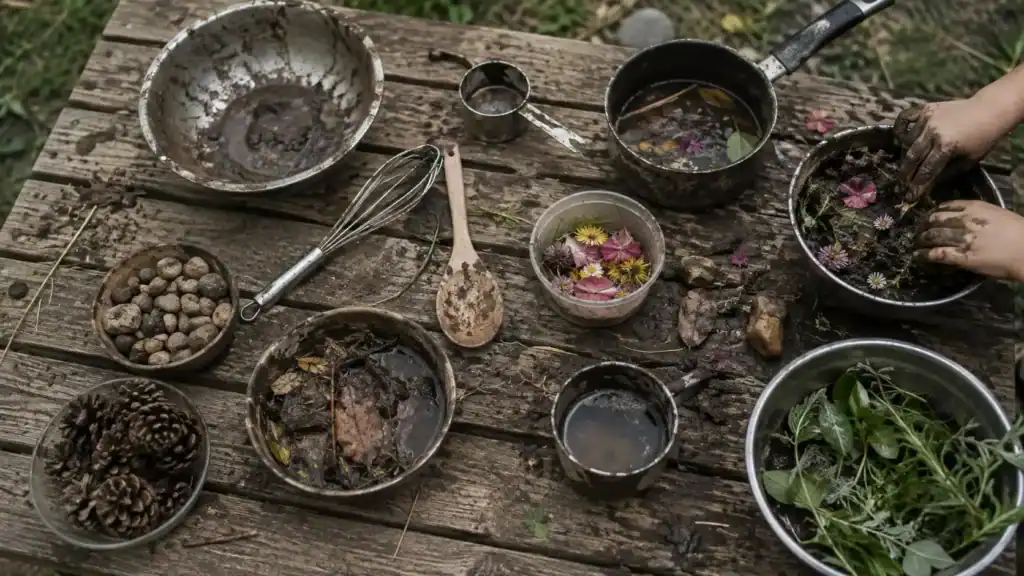
Useful supplies include:
- Wooden spoons
- Ladles
- Whisks
- Measuring cups
- Muffin tins
- Old saucepans
- Metal or plastic mixing bowls
- Ice cube trays
- Sieves and colanders
- Small jugs
- Watering cans
- Buckets
- Recycled containers
Then add whatever the backyard provides.
Dirt and water form the base. Leaves can become lettuce. Petals turn into cake decorations. Stones become potatoes. Grass clippings become herbs.
Kids rarely need anyone to explain the menu.
PICK ONE FROM EACH
12 Mud Kitchen Ideas for Kids
Mud kitchen play gets easier when kids have one small idea to start with. Try a mud pie, nature soup, potion, café, bakery, or digging challenge, then leave the rest open. The strongest backyard play ideas give children a starting point without deciding exactly how the whole game has to go.
1. Bake classic mud pies
Fill a muffin tin, bowl, or old cake pan with thick mud.
Leaves and flower petals make excellent decorations. Sticks can become candles.
2. Open a backyard café
Turn the mud kitchen into a café and start taking orders.
Mud coffee, leaf salad, stone soup, and grass spaghetti all tend to appear quickly.
3. Mix flower petal potions
Add water to a clear or light-colored container, then mix in petals, herbs, grass, and leaves.
A whisk makes potion making considerably more serious.
4. Make nature soup
Give kids a large pot and ask what soup is on today’s menu.
They can collect their own ingredients, then scoop, pour, stir, and serve.
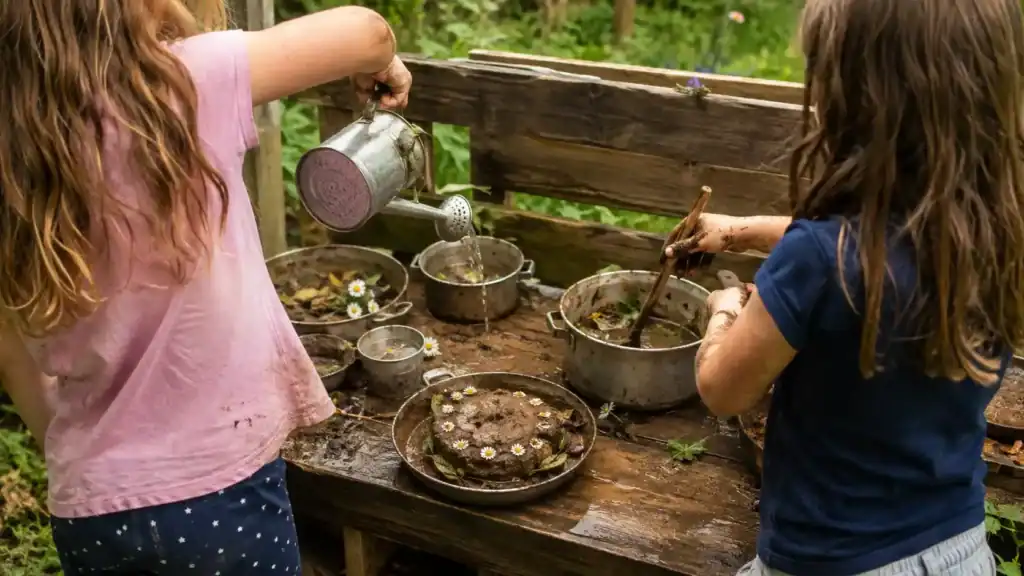
5. Set up a mud bakery
Muffin tins work brilliantly here.
Try mud cupcakes, leaf cookies, pinecone bread, or one enormous birthday cake.
6. Make a color kitchen
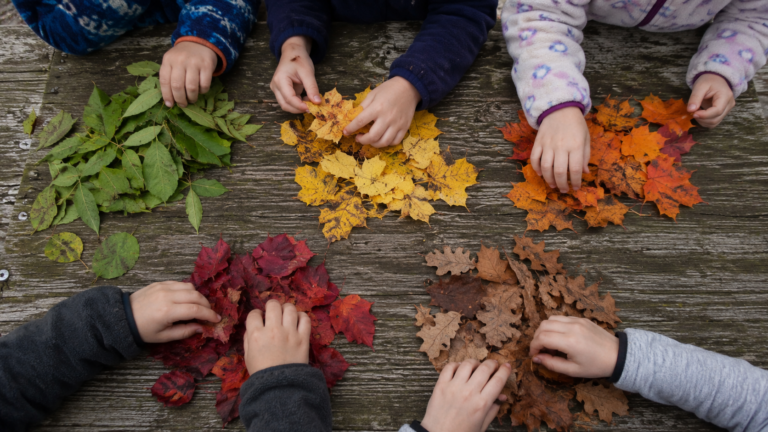
Collect natural ingredients in different colors and sort them before cooking.
Green leaves, brown soil, yellow petals, gray stones, and tiny red berries can all become ingredients. Only use berries that will remain part of pretend play rather than being eaten.
7. Create a pouring station
On warmer days, make water the main ingredient.
Add jugs, funnels, bowls, measuring cups, and bottles. Dirt can join once the clean water phase inevitably ends.
8. Make muddy ice cubes
Fill an ice cube tray with mud, petals, leaves, or colored water and freeze it overnight.
Bring the cubes back outside the next day and see what happens as they melt into the kitchen.
9. Try a garden restaurant
Let the garden decide what is available.
Fallen leaves, small weeds, herbs, petals, and twigs become the day’s produce. For another garden mission, use the Garden Scavenger Hunt before opening the restaurant.
10. Build tiny mud faces
Flatten a patch of thick mud onto a tray, tree stump, or stone.
Use leaves for ears, grass for hair, pebbles for eyes, and a curved twig for a mouth.
11. Make fall mud recipes
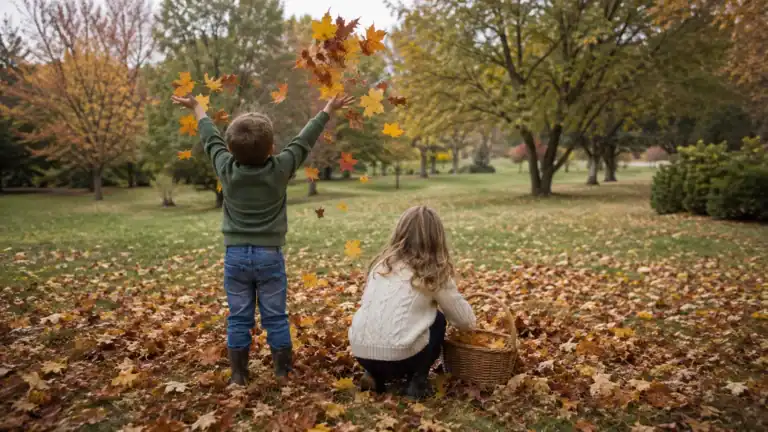
Acorns, crunchy leaves, seed heads, and fallen twigs give the kitchen a completely different ingredient shelf in autumn.
You can find more seasonal ideas in these fall outdoor activities for kids.
12. Invent a daily special
Write one pretend dish on a scrap of cardboard, then let the kids figure out how to make it.
Try “forest soup,” “five-leaf cake,” “stone stew,” or “the muddiest pudding in the garden.”
The sillier the name, the better.
How Do You Keep a Mud Kitchen Interesting?
A mud kitchen stays interesting when small parts change instead of the entire setup. Swap a few utensils, introduce a seasonal ingredient, add a simple challenge, or give the play a theme. Kids can return to the same outdoor space many times when there is one new detail waiting for them.
Try changing just one thing.
Bring out a muffin tin one afternoon. Add a whisk another day. Put out rosemary or mint from the garden. After rain, let puddle water become the special ingredient.
A printable can also give kids a reason to move beyond the kitchen. The Nature Scavenger Hunt Bundle turns ingredient collecting into its own outdoor mission before they come back to mix everything.
For busy weekdays, pair the kitchen with one of these after-school activities for kids. There is also a larger collection of free backyard activities for kids for days when the mud kitchen is temporarily out of service.
The Outdoor Activity Cards are another easy way to pick the next thing when nobody has an idea.
Send them off to find the next batch of ingredients. The Nature Scavenger Hunt Bundle gives the collecting part of the game a little more direction.
See the Nature Scavenger Hunt BundleGood to Know
Frequently Asked Questions About Mud Kitchens
Mud kitchens work in large gardens, small backyards, patios, and other outdoor spaces where a little mess is manageable. Most families can start with materials they already own. These answers cover the practical details parents often want to know before setting one up.
A mud kitchen works because it can stay simple. Dirt, water, old bowls, and a spoon are enough to begin.
Once it is part of the backyard, it can sit alongside everything from scavenger hunts to backyard camping ideas. Some days it becomes a bakery. Other days it is mostly a puddle with a whisk in it.
Both count.
Keep Exploring