Acorn Activities for Kids: 15 Easy Fall Nature Ideas
These acorn activities for kids turn a small handful of fallen acorns into sorting games, outdoor experiments, nature art, and pretend play. The 15 ideas below need little setup and work at a backyard table, on a patio, or beside a park path.
Start with one activity and reuse the same collection. These hands-on ideas are for children who can reliably keep small objects out of their mouths, with an adult nearby. Toddlers can join an acorn walk by spotting and pointing while an adult handles the finds.
One handful, one idea, ten minutes. Find a few fallen acorns where collecting is allowed. Try a size sort, a rolling experiment, or a temporary picture, then follow whichever activity holds their attention.
Before you start: collecting acorns for outdoor play
Use a few intact fallen acorns, a shallow tray, and a clear place to play. Check local collecting rules, leave plenty on the ground, and avoid moldy or broken finds. Keep acorns and loose caps away from children under three and anyone who still mouths objects.
The American Academy of Pediatrics explains that small objects can cause choking. Use its choking-prevention guidance when choosing materials. For younger siblings, try pointing out acorns, looking at an adult-held collection, or drawing large acorn shapes together instead of handling loose pieces.
Pick a spot away from roads, animal waste, and treated garden beds. Brush off loose dirt; if acorns are muddy, rinse them and spread them out to dry. Washing does not make them edible or remove the small-parts risk. Keep play materials separate from snacks and wash hands afterward.
Acorns are food for wildlife, including wood mice, as the Woodland Trust’s oak wildlife guide explains. A handful is enough to reuse across these ideas. If collecting is not permitted, make the outing a looking-and-drawing activity.
Find, sort, and count: acorn activities 1 to 5
Start with finding and comparing before adding extra materials. An acorn scavenger hunt, cap matching, size sorting, counting, and repeating patterns all use the same handful. Give younger participants one clear task; older children can choose a rule, explain a comparison, or design the next challenge for someone else.
1. Go on a tiny acorn scavenger hunt
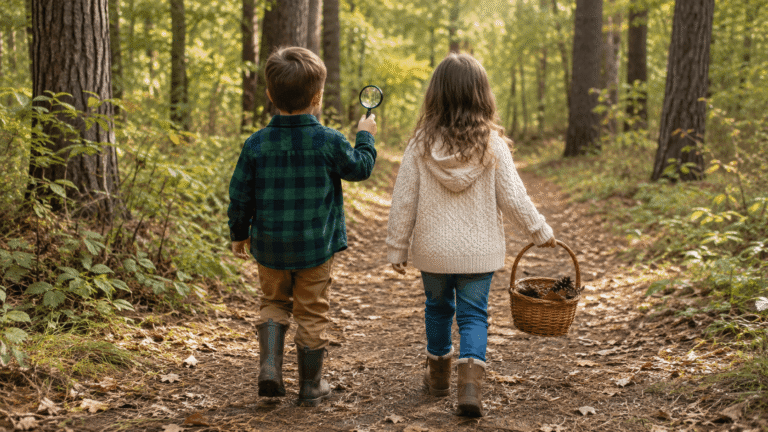
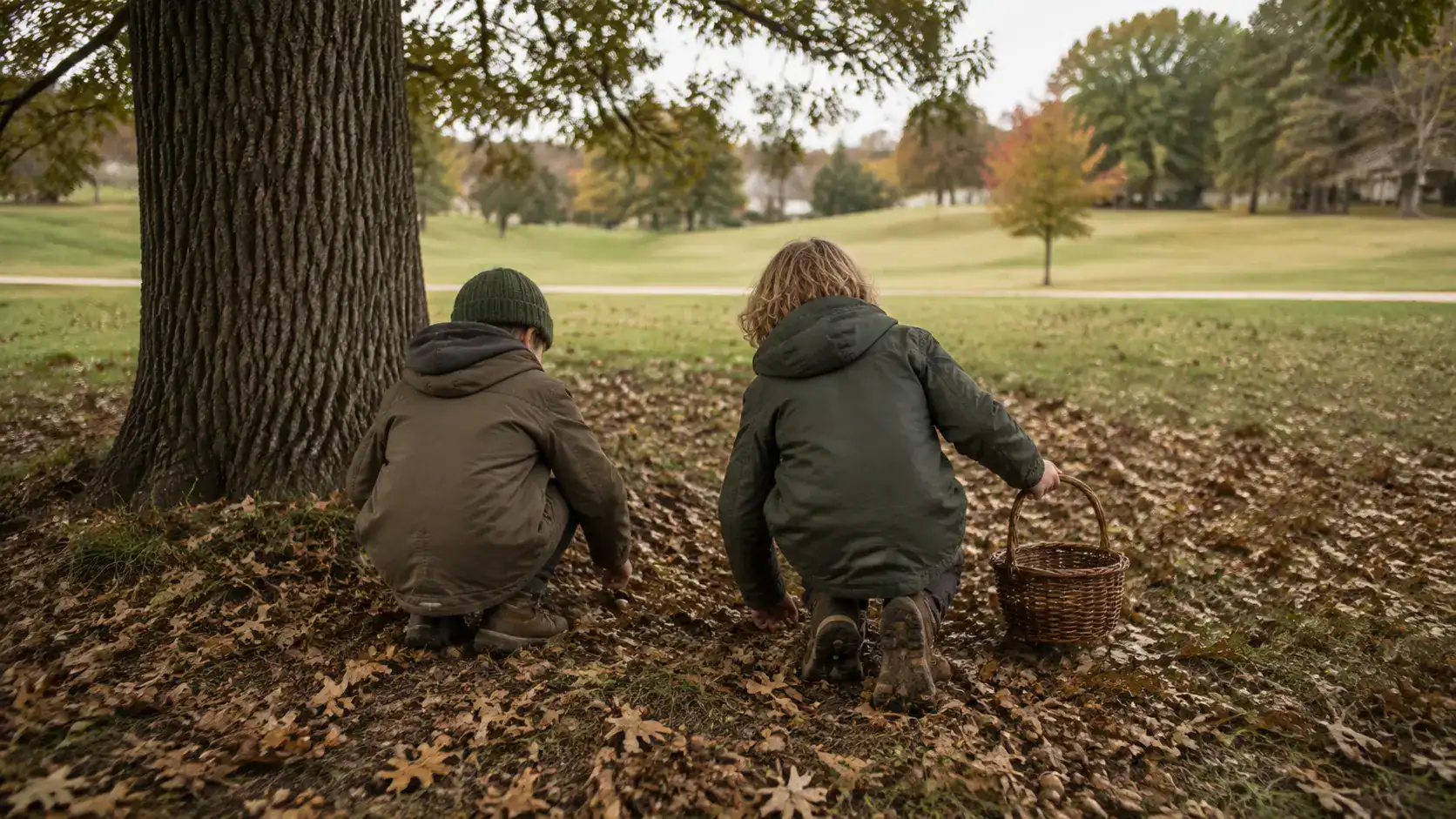
Look beneath a familiar oak for three things: an acorn with a cap, one without a cap, and an empty cap. Point to each find or collect a few where permitted. Stay together within a small area instead of racing to fill a bucket. Add leaves, bark, and weather clues with these autumn nature hunt ideas for kids.
If one item is missing, change the challenge to something you can see, such as the smallest acorn or a darker one. The hunt is finished whenever you decide it is. There is no need to find a matching set. If the hunt turns into a longer exploration, these easy nature activities for kids offer more simple things to notice and try outside.
2. Play match the cap
Set out a few acorns and caps that have already come apart. Try resting each acorn in different caps. Which looks like a close fit? Which cap is too wide? Leave attached caps in place rather than pulling everything apart.
Explain that finding a good fit does not prove it is the acorn’s original cap. This is a comparing game, and an imperfect match still gives children something to notice.
3. Sort acorns your own way
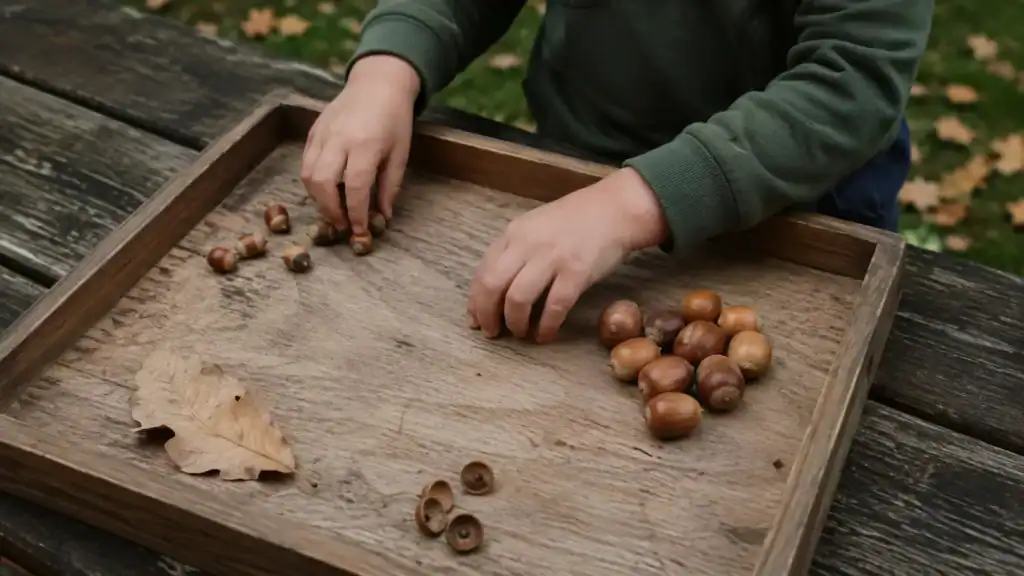
For an easy acorn sorting activity, make two groups on a tray: larger and smaller. Then mix them up and let your child invent another rule. Try lighter and darker, rounder and longer, or capped and uncapped.
Ask where a tricky middle-sized acorn belongs and let them decide. If comparing textures becomes the main interest, these fall sensory activities for kids offer more ways to explore natural materials outside.
4. Make little counting nests
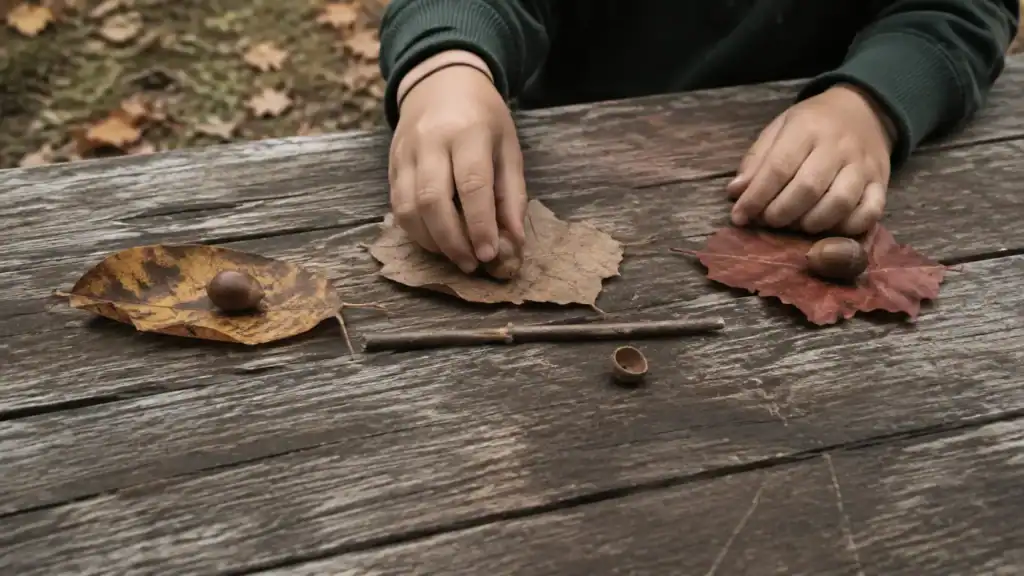
Place five fallen leaves on the table. Put one acorn on the first, two on the next, and continue only as far as your collection allows. Touch each acorn while counting so the spoken numbers follow the objects.
For a shorter version, use two leaves and share six acorns between them. Older children can predict how many need moving to make the groups equal. Keep the acorns visible rather than hiding them in thick leaf piles.
5. Build a repeating nature pattern
Lay down an acorn, a leaf, another acorn, and another leaf. Ask what could come next. Try two acorns followed by one leaf, or let your child create a sequence for you to continue.
Use the materials you already have and reuse them between rounds. A short pattern on a tray works on a breezy day when a long line across the grass would keep blowing away.
Pick One From Each
1. FIND
Try the tiny hunt or look for a cap that fits.
2. COMPARE
Sort by size or share acorns between leaf nests.
3. MAKE
Build a repeating pattern with acorns and leaves.
Roll, move, and investigate: acorn activities 6 to 10
A tray, a spoon, and a short piece of cardboard give acorn play a different direction. Children can test rolling, steer through a maze, transfer a collection, compare floating, or study details. Change one part at a time so they can notice what changed without needing a formal lesson.
6. Test an acorn rolling ramp
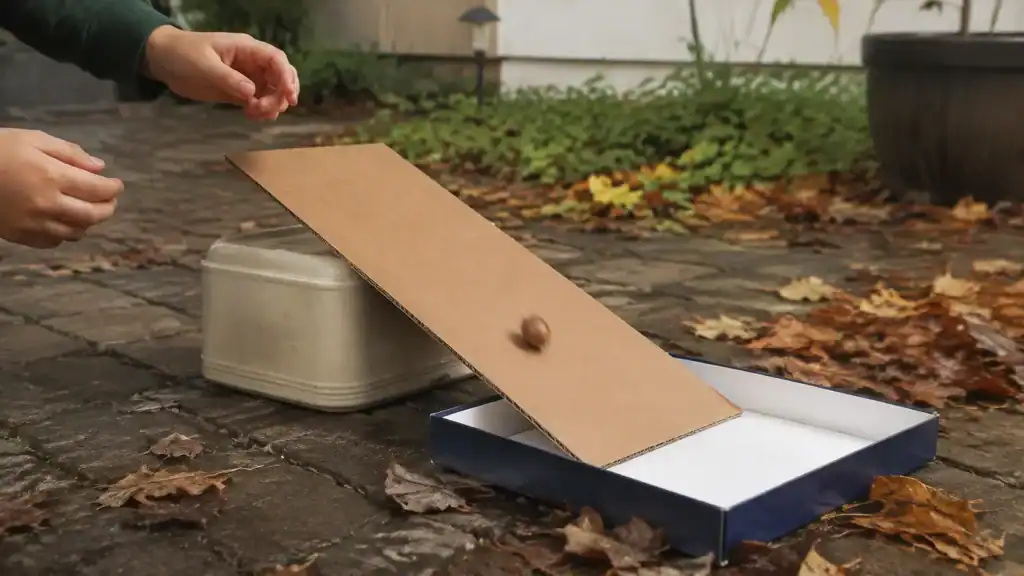
Rest one end of a short piece of cardboard on a sturdy low container, with the bottom inside a tray. Release an acorn from the top without pushing it. Watch whether it rolls straight, curves, or stops.
Try another acorn, then raise the ramp a little. Older children can draw the routes on scrap paper. Keep the setup low and collect escapees before switching games so loose acorns do not end up underfoot.
7. Steer through a twig maze
Arrange short, blunt fallen twigs in a shallow tray to make a winding route. Place an acorn at one end and gently tilt the tray to move it toward the other. Start with one bend before adding turns.
If the twigs slide, put the tray down and guide the acorn with a fingertip instead. This changes the ramp experiment into a steering challenge, with a route your child can rebuild whenever it becomes too easy.
8. Move the collection with a spoon
Put two bowls next to each other on an outdoor table. Transfer the acorns from one bowl to the other using a spoon. A larger spoon makes an easier start; a smaller one adds a balancing challenge.
Work together to move the whole collection rather than racing. Keep the bowls within comfortable reach, and stay seated or standing still while handling the small pieces. Count them back into the tray at the end.
9. Compare what floats
Fill a shallow bowl with a little clean water. Let your child predict what will happen to one acorn, one detached cap, and one leaf. Place them in gently, one at a time, and describe what you actually see.
Try another acorn if the results surprise you. Treat this as a floating experiment, not a test of whether an acorn is safe to eat or guaranteed to grow. Stay beside the bowl and empty it when finished.
For more experiments with puddles, leaves, and water, try these rain activities for kids on your next wet afternoon.
10. Draw an acorn close-up
Put one acorn on cream paper at an outdoor table. Look for its point, cap edge, color changes, and any marks. Use a magnifying glass if you already have one, then draw what you can see with a pencil.
Compare the drawing with a second acorn and add one difference. For children who prefer talking, an adult can write their observation beneath the picture. A rough oval and a bumpy cap are enough to start.
Make and imagine: acorn activities 11 to 15
Use acorns as loose parts for temporary outdoor pictures, pretend places, and simple games. These acorn nature crafts need no glue or paint. Children can rearrange everything as they play, photograph something they want to remember, and pack away the same small collection for another day.
11. Make an acorn spiral
Place one acorn in the middle of a tray or patch of bare ground. Add the others in a loose spiral, leaving gaps between them. Fallen leaves can extend the shape when the acorns run out.
Try a zigzag or a ring on the next turn. For more ways to combine the two materials, these leaf activities for kids include other simple nature-art ideas.
12. Build a tiny acorn campsite
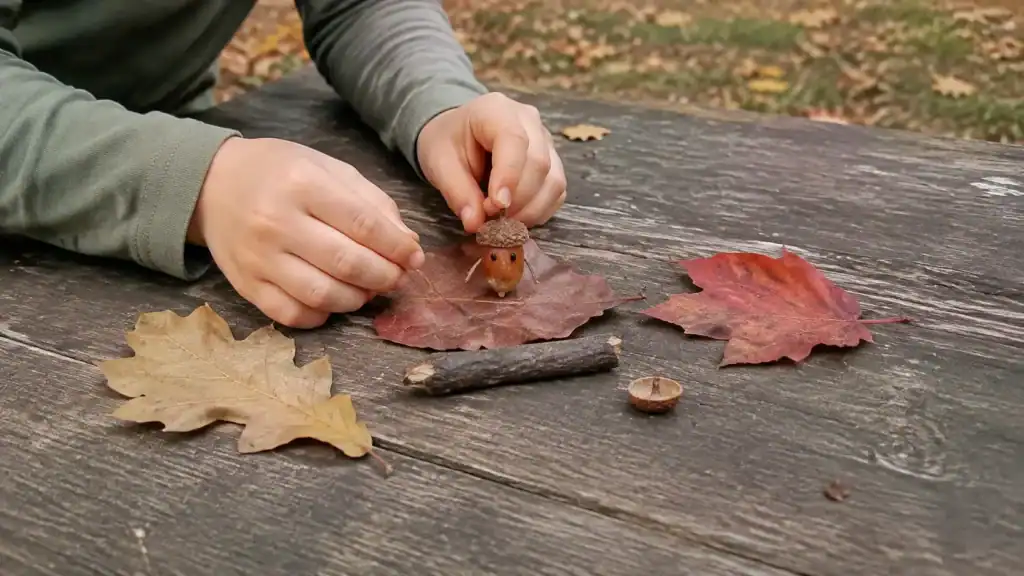
Use a few blunt fallen twigs as tent supports and rest a fallen leaf over them. Set an acorn camper beside the shelter, with empty caps as pretend bowls. Build on a tray so the little scene stays together.
Let your child decide where the camper sleeps and what happens when the leaf roof slips. Keep it an imaginary campsite; there is no need to collect insects or move real animals into the shelter.
13. Press acorn tracks in mud
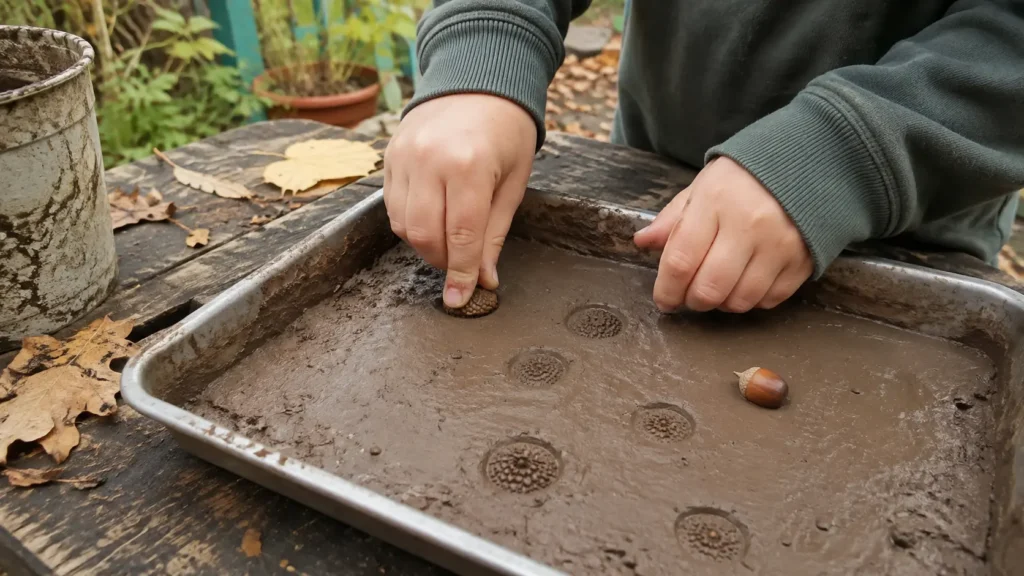
Spread a thin layer of clean garden mud in an old tray. Press the side of an acorn into it, lift it, then try the cap. Compare the marks without expecting a neat or detailed print.
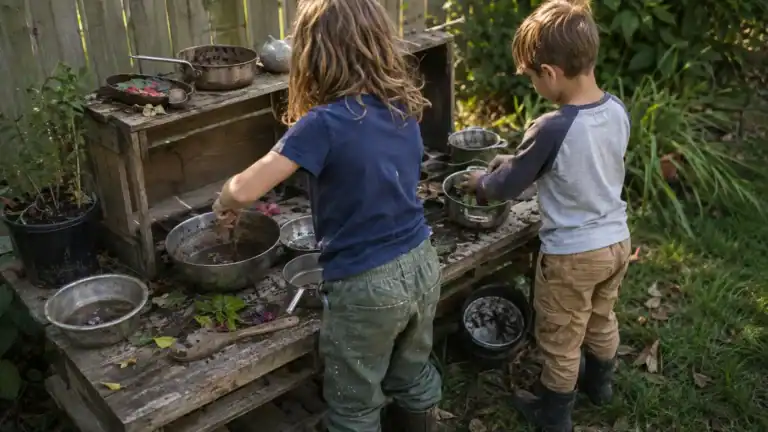
Make a short trail of impressions and ask someone to guess which part made each one. Use a familiar spot free of animal waste and garden chemicals, and wash hands when the mud play is done. If the mud tray holds their attention, these mud kitchen ideas for kids give them more ways to mix, scoop, and make with old bowls and garden finds.
14. Play what is missing
Set three noticeably different finds in a row: a capped acorn, an uncapped acorn, and an empty cap. Give everyone time to look, then ask one player to turn away while you remove one piece.
Turn back and name what changed. Add a fourth or fifth item for an older child, or swap two positions instead of removing anything. Keep the hidden piece in the adult’s hand or a container, not loose in the grass.
15. Tell an acorn journey
Choose one acorn as the main character and lay out three fallen leaves as places on its route. Move it from a leaf boat to a leaf house to a leaf hill, adding one sentence at each stop.
Take turns deciding what happens next. A cap might become a backpack and a twig might become a bridge. Finish by choosing where the acorn rests, then gather the pieces back into the tray. Keep the tiny-world play going with these free backyard activities for kids, including fairy gardens and miniature garden villages.
Turn one acorn walk into a simple fall plan
Choose one collecting idea and one follow-up activity for today. Keep the rest for another afternoon, and let the weather decide whether you use a park path, an outdoor table, or a sheltered porch. There is no need to work through all 15 or bring home a finished craft.
If your family likes choosing seasonal outings from a sheet, our Fall Bucket List Printable on Etsy can sit alongside these acorn ideas as a starting point for your next fall afternoon.
Print + Go
Fall Bucket List Printable
Keep a few seasonal ideas ready for another day outside. Use the printable to choose what appeals to your family after today’s acorn play.
View the Fall Bucket List Printable →Prefer to choose from an article? Our fall bucket list ideas for kids include quick nature missions and bigger family outings. Pick one that fits the time you have.
Good to Know
Frequently Asked Questions About Acorn Activities
A few practical answers about starting small, choosing age-appropriate activities, and using the collection you already have.
What can kids do with acorns?
Kids can sort, count, roll, compare, and arrange acorns, or use them in temporary nature art and pretend play. Start with a small collection and choose one activity, such as a cap-matching game or a simple outdoor spiral.
Are acorns suitable for toddlers to play with?
Loose acorns and caps are small-parts choking hazards. Keep them away from children under three and anyone who still mouths objects. Toddlers can point out acorns on a walk while an adult handles the finds.
What are easy acorn activities for preschoolers?
For preschoolers who reliably keep small objects out of their mouths, try sorting by size, matching loose caps, or counting acorns onto leaves with close supervision. Use just a few pieces and give one clear task at a time.
Do you need to bake acorns before playing with them?
These outdoor activities do not require baking. Choose intact finds, brush off dirt, and rinse muddy acorns before spreading them out to dry. Washing or baking does not make acorns safe for children who mouth small objects.
Can you do acorn activities without craft supplies?
Yes. Sort acorns on the ground, build patterns with fallen leaves, or tell a story using an acorn character. A reused tray helps contain the pieces, but glue, paint, and a craft kit are unnecessary.
What if we cannot find any acorns?
Turn the walk into an oak-tree observation outing, draw acorn shapes together, or try leaf-based versions of the sorting and pattern games. There is no need to buy acorns or gather them where collecting is restricted.
When interest fades, count the pieces back into the container and put it out of young children’s reach. Keep the drawing or a photo if someone wants a record. The same handful can be enough for your next outdoor afternoon.
Keep Exploring
More simple ideas for your next afternoon outside
Choose another guide based on the space you have and what your child enjoyed today.
Print. Go outside. Repeat. 🌿