How to Start a Nature Journal With Kids: 5 Fall Ideas
Learning how to start a nature journal with kids can begin with one leaf and a few minutes outside. If a blank notebook feels like another project to organize, give the first page one small job. These five fall nature journal ideas turn ordinary finds into drawings, color patches, questions, and short records you can revisit.
One page. One find. Five minutes. Take a notebook and pencil outside. Draw one fallen leaf, add the date, and write down one thing your child notices. Finish there or keep looking.
What do you need to start a nature journal with kids?
To start a nature journal with kids, bring a notebook or folded paper, a pencil, and something firm to lean on. Choose one familiar outdoor spot and record one thing together. Add the date, a quick sketch, and a few words about what your child notices.
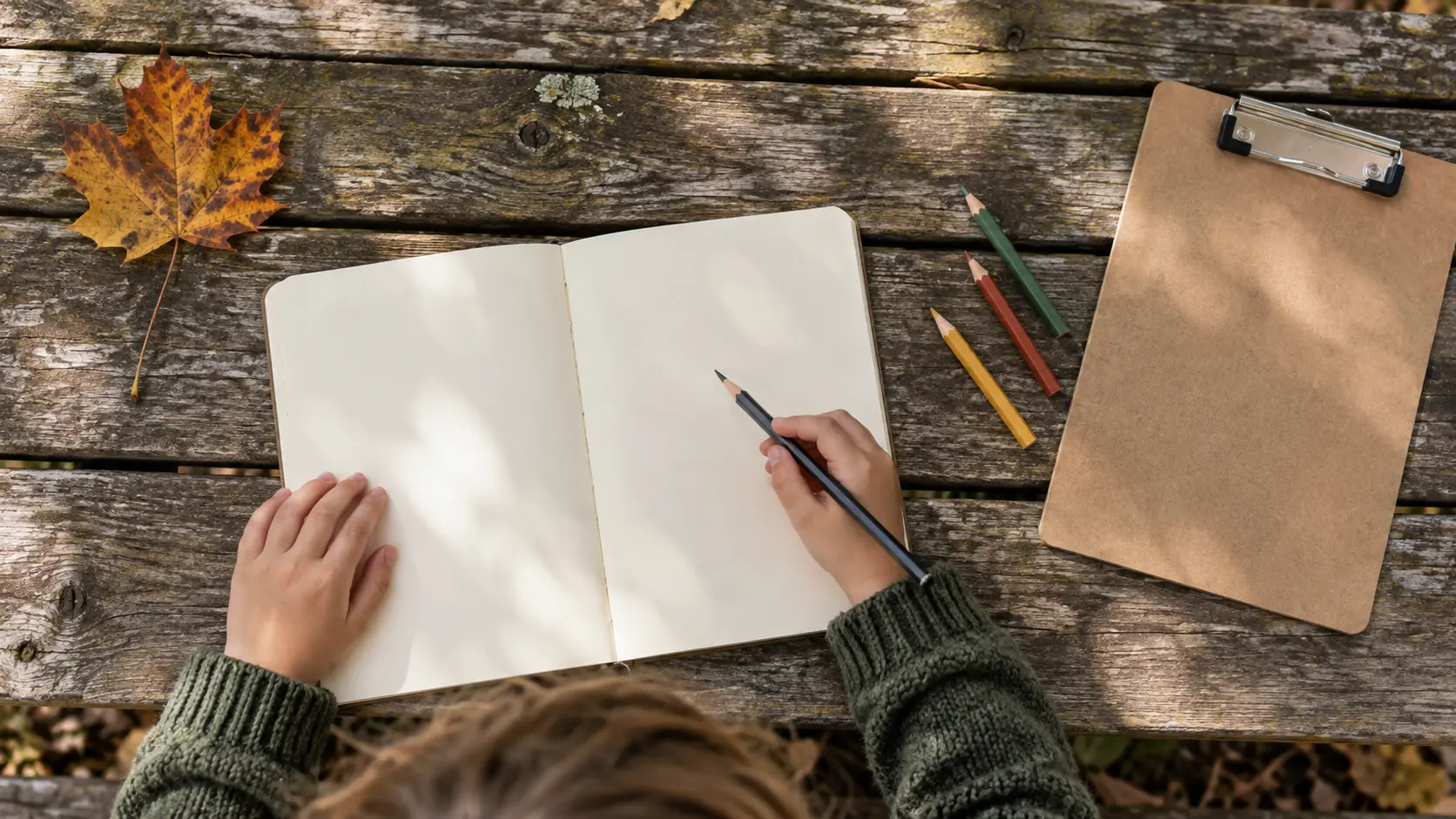
Keep nature journal supplies simple. A plain school notebook or loose sheets clipped to cardboard work well, especially when siblings want separate pages. Colored pencils are useful for fall colors, but one ordinary pencil can record shapes, patterns, and questions.
Try this five-step routine on your first outing:
- Pack paper and a pencil. Add a clipboard if there is nowhere comfortable to write.
- Pick one nearby spot. A park bench, backyard tree, or patch of grass is enough.
- Add the date and weather. A grown-up can write while a younger child draws a weather symbol.
- Record one discovery. Draw it, describe it, count part of it, or dictate a sentence.
- Finish with a question. Leave space to add another observation on your next visit.
For a child who gets stuck on drawing, offer three choices: make a mark, tell you a word, or point. A brown scribble labeled “crunchy leaf” is already a record of a real discovery.
Mix words, pictures, and numbers in any way that helps your child record a discovery. A few spoken words, a rough outline, or a count can give you something useful to compare on the next visit.
If you want an activity before opening the notebook, choose one of these easy nature activities for kids, then record a favorite detail.
Your first journal page
One discovery + one detail + one question
Choose something nearby, record a feature your child notices, then leave room for a question. A rough sketch, a color patch, or words dictated to a grown-up all work.
1. Make a fall leaf color page
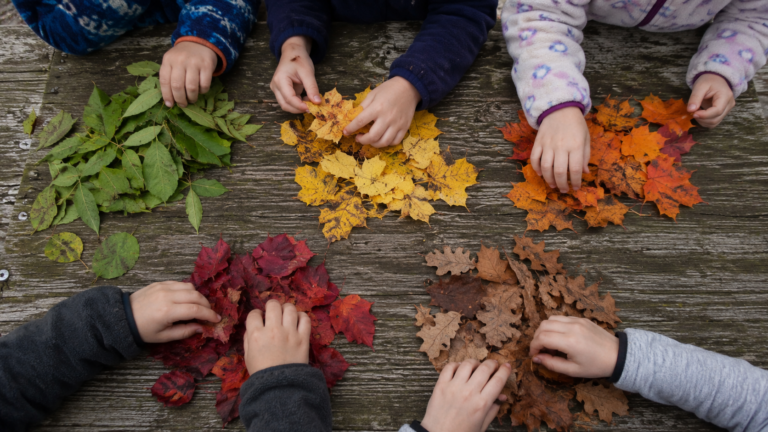
A fall leaf color page starts with two or three fallen leaves and a few matching pencil or crayon colors. Children can draw an outline, make a rubbing, or add color patches beside each leaf. Record one difference, such as a spotted edge, a curled tip, or a darker underside.
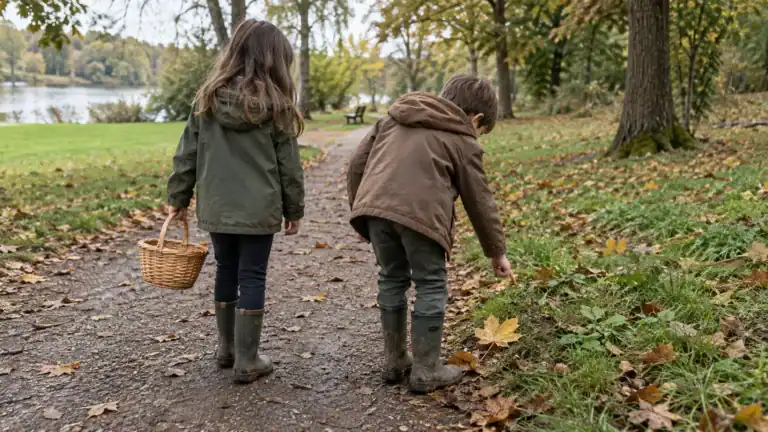
Look for leaves in a small area where collecting is permitted. Two leaves from beneath the same tree can be more interesting to compare than a huge mixed pile.
Place one leaf beside the page and ask, “Where does the color change?” Your child might draw a green center with yellow edges, or fill the page with orange dots. Add their own description underneath.
For a rubbing, place a dry leaf beneath thin paper and gently move the side of a crayon over it. If the notebook paper is too thick, make the rubbing on a separate sheet and attach it later.
Keep damp leaves out of a closed notebook. Draw or photograph them instead, then leave them outside. Try another of these leaf activities for kids if the collecting turns into a longer afternoon.
2. Draw one small fall discovery
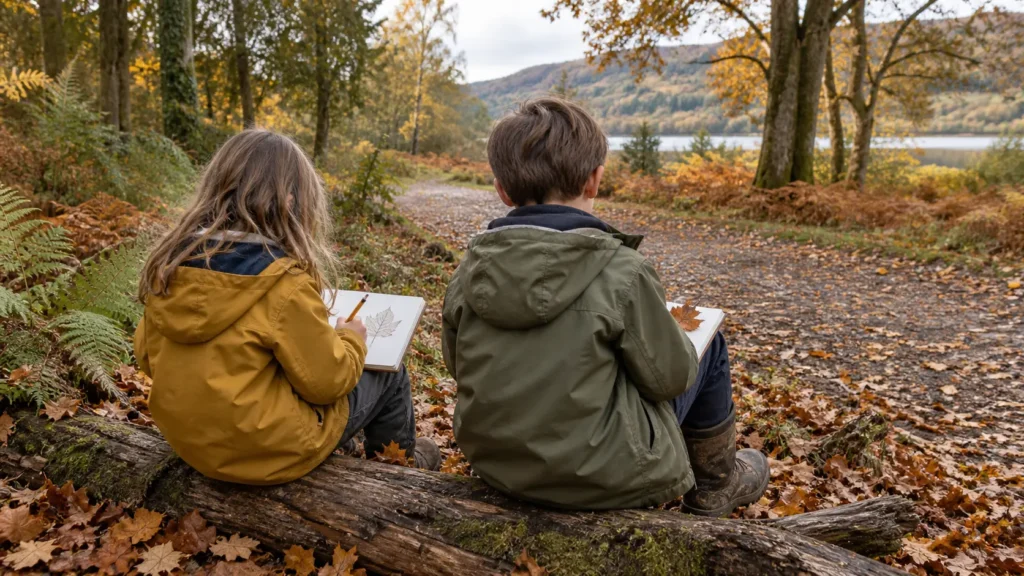
Drawing one small fall discovery gives a nature journal page a clear focus. Choose a fallen acorn, seed pod, pine cone, or familiar leaf. Look at its outline first, then add one close-up detail. A child can describe the object while a grown-up writes their words alongside the sketch.
Start with a question that leads back to the object: “What shape is the cap?” works better than asking for a beautiful picture. Turn the find around and see whether the underside looks different.
Draw it twice if your child wants: once at its actual size and once much bigger. The larger drawing makes room for a crack, ridge, hole, or pattern that was easy to miss.
Add a number in any useful way. Count the points on a leaf, compare two pine cones, or estimate the length before measuring. Label guesses as guesses so the page keeps track of what you actually observed.
Our acorn activities for kids offer more ways to explore the same find after drawing it. For children who mouth objects, choose a large leaf or observe small finds without handling them.
Good to know: Draw finds where they are whenever possible. Leave living plants, wildlife, nests, and fungi undisturbed. Collect a few common fallen items only where permitted, and keep small finds out of reach of children who mouth objects.
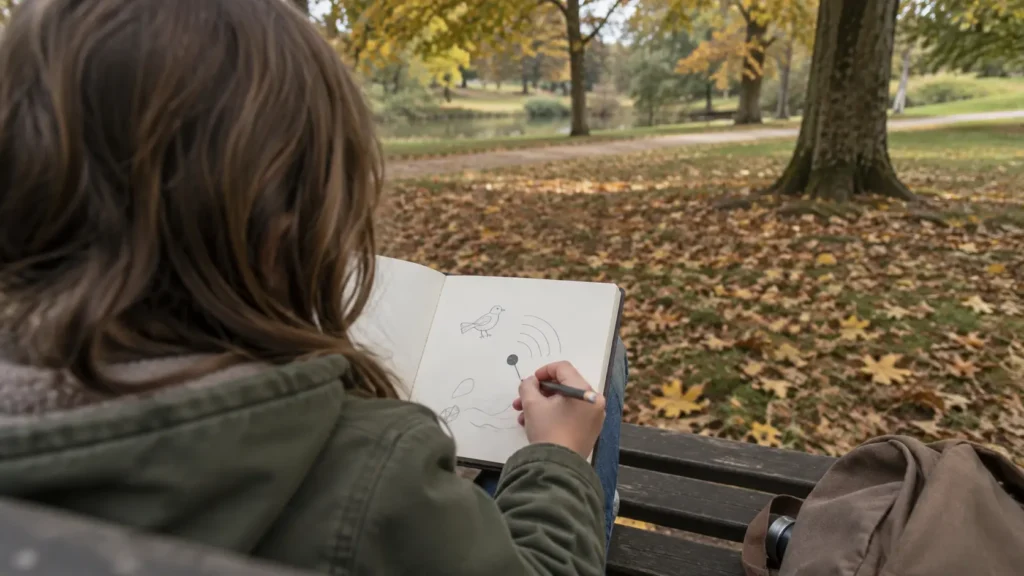
3. Create a fall sound and texture map
A fall sound and texture map records what children notice around one sitting spot. Put a dot in the middle of the page for your location, then draw marks around it for sounds. Add texture words for familiar surfaces nearby, such as rough bark, smooth stones, or dry grass.
Listen together for a short pause. Your child might hear a bird behind the bench, leaves overhead, or footsteps on the path. Use simple symbols and place them roughly where the sounds came from.
A wavy line can mean wind. Little dots can mean dripping water. If a sound is unfamiliar, add a question mark rather than guessing what made it.
For texture notes, let your child choose whether to touch a familiar surface or simply describe how it looks. Record their exact comparison, even if the bark feels “like dinosaur knees.”
This is an easy option for children who enjoy listening and talking more than drawing. Explore these fall sensory activities for kids for another sensory experience to record.
Print + Go
12 Printable Scavenger Hunt Activities for Kids (PDF)
Give your next nature walk a simple starting point with our bundle of 12 printable scavenger hunt activities for kids. After exploring outside, choose one discovery to draw or describe in your nature journal.
View the bundle on Etsy →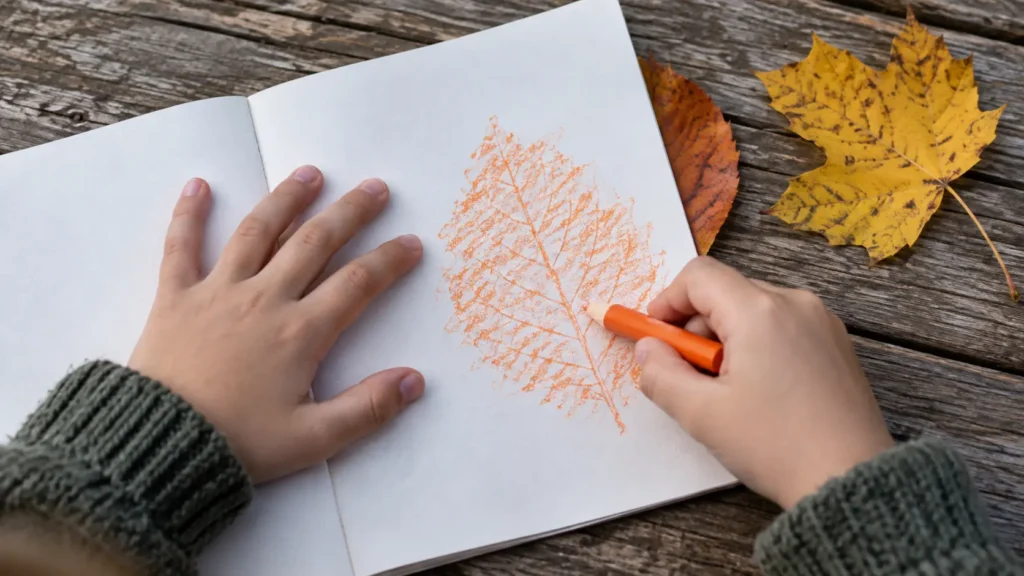
4. Keep a tiny fall weather record
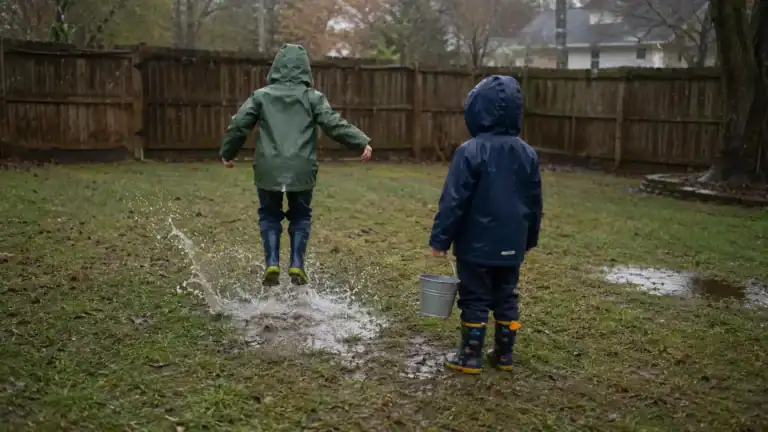
A tiny fall weather record combines the date, a weather symbol, and one observation from the same outdoor spot. Children can sketch clouds, draw wind lines, or describe a puddle. Return on another day and compare the pages to notice what changed and what stayed the same.
Divide one page into four boxes, leaving space for four separate visits. Each box can hold a sun, cloud, or raindrop symbol plus a short note. There is no need to fill them on consecutive days.
Make the observation specific: “Leaves moved across the path” tells you more than “windy.” “The puddle reaches the crack” gives you something to check later.
If your child wants numbers, record a temperature from a thermometer and note the time. Otherwise, comfortable descriptions such as cool, warm, still, or breezy are enough.
Keep the notebook dry under shelter and add details after your walk if needed. These rain activities for kids can give you something else to observe when the weather is mild enough for outdoor play.
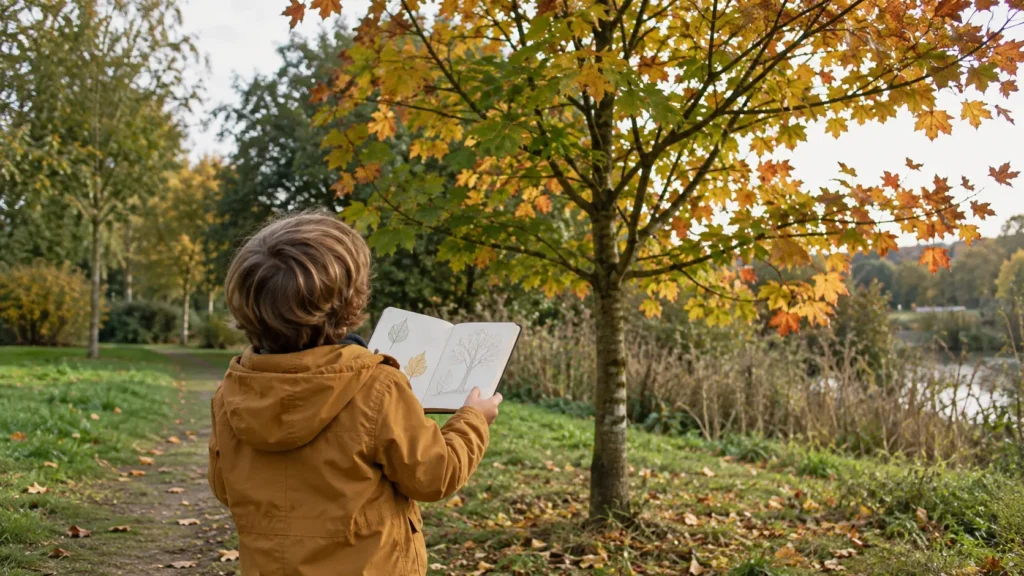
5. Visit the same tree through fall
Visiting the same tree through fall turns separate journal pages into a simple seasonal record. Choose a tree you regularly pass and sketch one branch, the canopy, or the ground beneath it. Add dates and compare leaf colors, bare patches, and fallen material over several visits.
Choose a spot you can reach comfortably, including from a bench or accessible path. A shrub or small garden plant works if there is no nearby tree.
On the first visit, draw the outline and mark a few patches of color. Next time, look from roughly the same place. Ask what is still there before looking for changes.
Children who like detail can follow one reachable branch without picking it. Others may prefer broad color patches or a sentence you write for them. Comparing the pages is the activity; matching drawings are optional.
Tie the visit to a route you already take. A few minutes on the way home can fit alongside these after-school outdoor activities for kids.
Good to Know
Nature Journaling With Kids FAQs
Nature journaling for kids can include drawings, spoken observations, color patches, counts, and questions. Begin with the recording method your child already enjoys and keep the first outing short. A shared family notebook works well too, with each person adding a small detail from the same walk.
What age can kids start a nature journal?
Preschoolers can begin with marks, leaf rubbings, or words dictated to a grown-up. Older children can add dates, labels, counts, and comparisons. Match the page to the child’s interests and current writing skills.
What goes on the first page of a nature journal?
Add the date, your location, and one thing your child notices. Include a quick drawing or color patch and a short description. A question about the discovery gives you a reason to look again.
How do you nature journal with a child who dislikes drawing?
Offer spoken notes, tally marks, color patches, or a photograph to attach later. You can write down their exact words. A journal can record careful observations without a detailed drawing.
How often do kids need to use a nature journal?
Use it whenever a short outing and some curiosity line up. Weekly visits can make seasonal changes easier to compare, but occasional entries count too. Leave gaps without turning the notebook into a catch-up task.
Can you make a nature journal without buying a notebook?
Yes. Fold scrap paper into a booklet or clip loose sheets to cardboard. Keep finished pages together in a folder. A pencil and a firm writing surface are enough for the first outing.
What are easy fall nature journal prompts?
Try comparing two leaf colors, drawing an acorn cap, mapping nearby sounds, recording a puddle, or revisiting one tree. Choose one prompt per outing and add your child’s own question underneath.
Start with one page this fall
The easiest way to start a nature journal with kids this fall is to choose one nearby discovery and record it together. Bring a pencil, keep the page simple, and stop while the outing still feels manageable. A single observation gives you something to revisit on another day.
For children who prefer a search before settling down, try a fall nature scavenger hunt and journal one favorite find. Leave the notebook near the door for next time.
Keep Exploring
More discoveries for your next journal page
Choose a leaf activity, a sensory outing, or a short nature hunt, then record one detail worth looking at again.
Print. Go outside. Repeat. 🌿