25 Fall Sensory Activities for Kids Outside
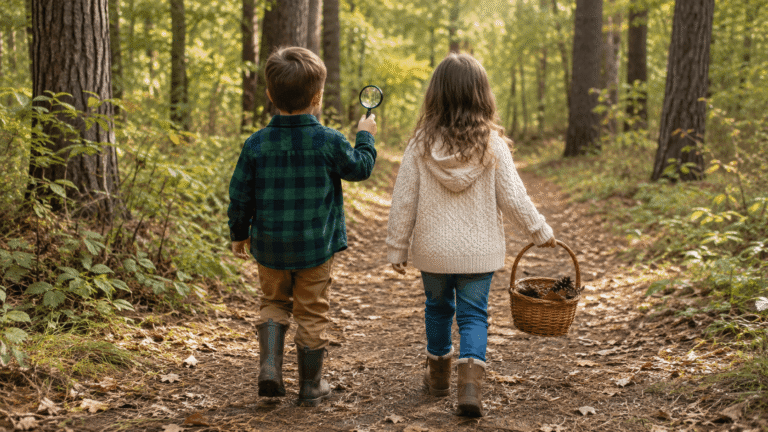
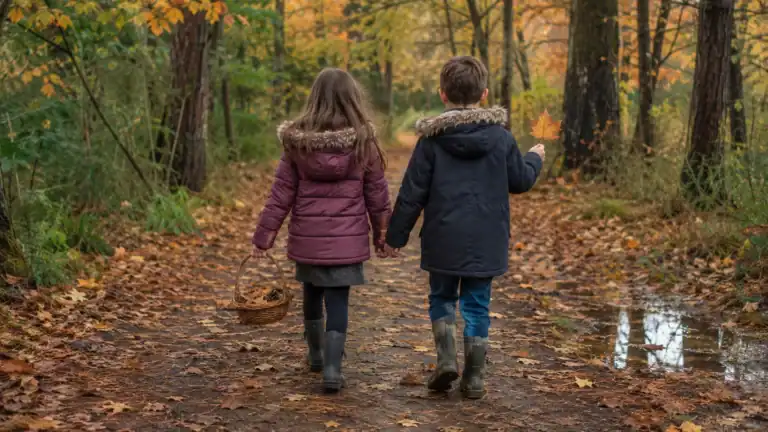
These fall sensory activities for kids use leaves, mud, acorns, sticks, rain and other things already outside. Most are free, need almost no setup and work in a backyard, garden, park or on a short neighborhood walk.
Fall does a lot of the setup for you.
Leaves turn dry and crunchy. Soil gets damp. Acorns and seed pods cover the ground. Wind, rain and cooler temperatures give kids something new to feel, hear and notice.
Pick one idea and go.
Start with three free things: something to touch, something to collect, and something that changes with fall. Leaves, mud, acorns, rainwater, bark or wind are enough. Pick one idea below and let the season do most of the setup.
What Is Fall Sensory Play?
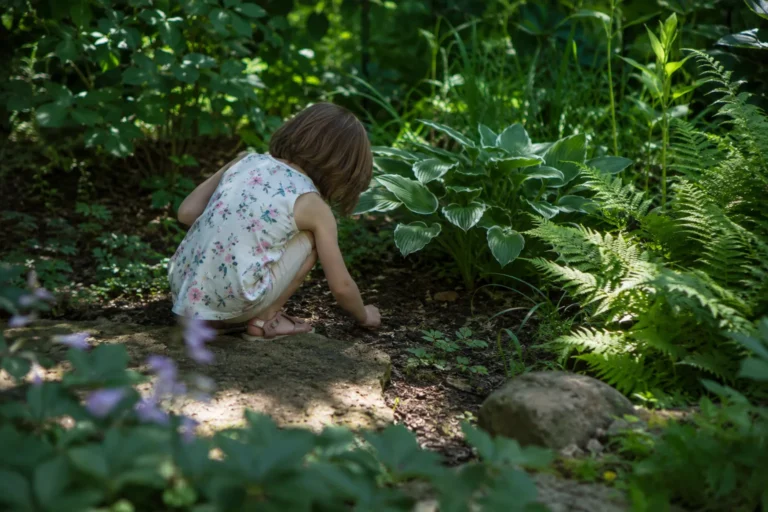
Fall sensory play lets kids explore autumn through touch, sound, sight, smell and movement. Fallen leaves, cool mud, rough bark, rainwater, wind, acorns and herbs all provide changing sensory experiences. An outdoor sensory activity can be as simple as comparing three leaves or stopping to listen to the wind for one minute.
Sensory play does not have to mean a carefully prepared bin.
Outside, most of the materials are already there.
The American Academy of Pediatrics suggests tactile outdoor activities including mud painting, leaf stamping, drawing in dirt and playing with natural materials. It also notes that mud play with old pots and household tools can support sensory exploration and motor skills.
Head Start describes weather play as a rich sensory experience too. Wind, rain, sunshine and even watching ribbons move in a breeze give young children things to observe and investigate.
There is also a big audience actively looking for these ideas. Pinterest’s 2026 Parenting Trend Report reported a 1070% year-over-year rise in searches for “sensory play ideas.”
Interest in sensory play is rising fast, and outdoor play gives kids a natural mix of textures, sounds, movement and changing materials to explore, according to the Pinterest Parenting Trend Report 2026 and guidance from the American Academy of Pediatrics
THE FREE FALL SENSORY FORMULA
Something to touch + something to notice + something to change.
That is enough for leaf sorting, mud mixing, acorn hunts, puddle experiments, listening walks and plenty of other sensory play outside.
Easy Fall Sensory Activities With Mud and Water
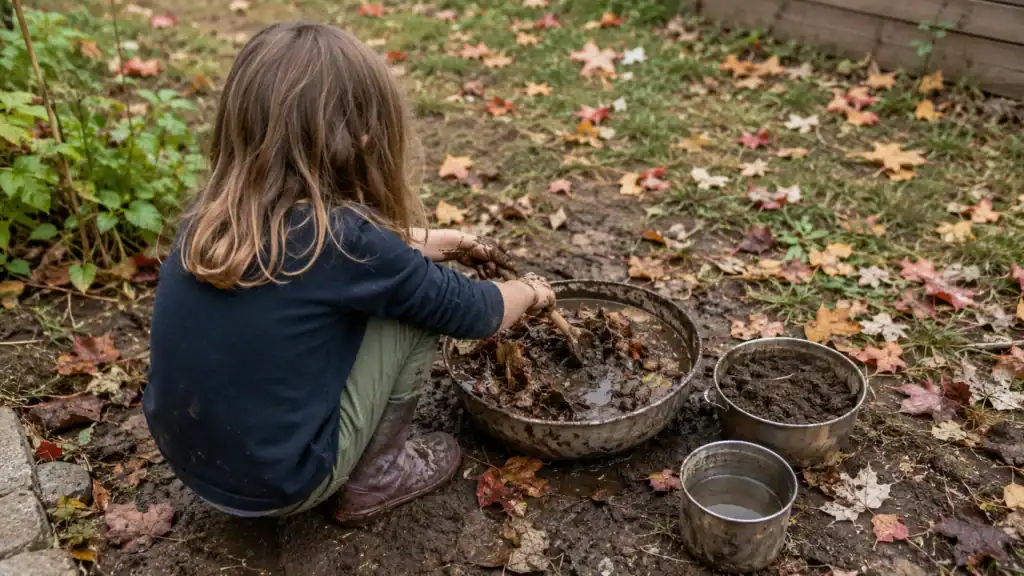
Mud and water make easy fall sensory materials because kids can pour, squeeze, scoop, stir and change their consistency. Fall rain adds puddles, damp soil and wet leaves with almost no preparation. Add a bucket, spoon or old bowl and there is already plenty to investigate.
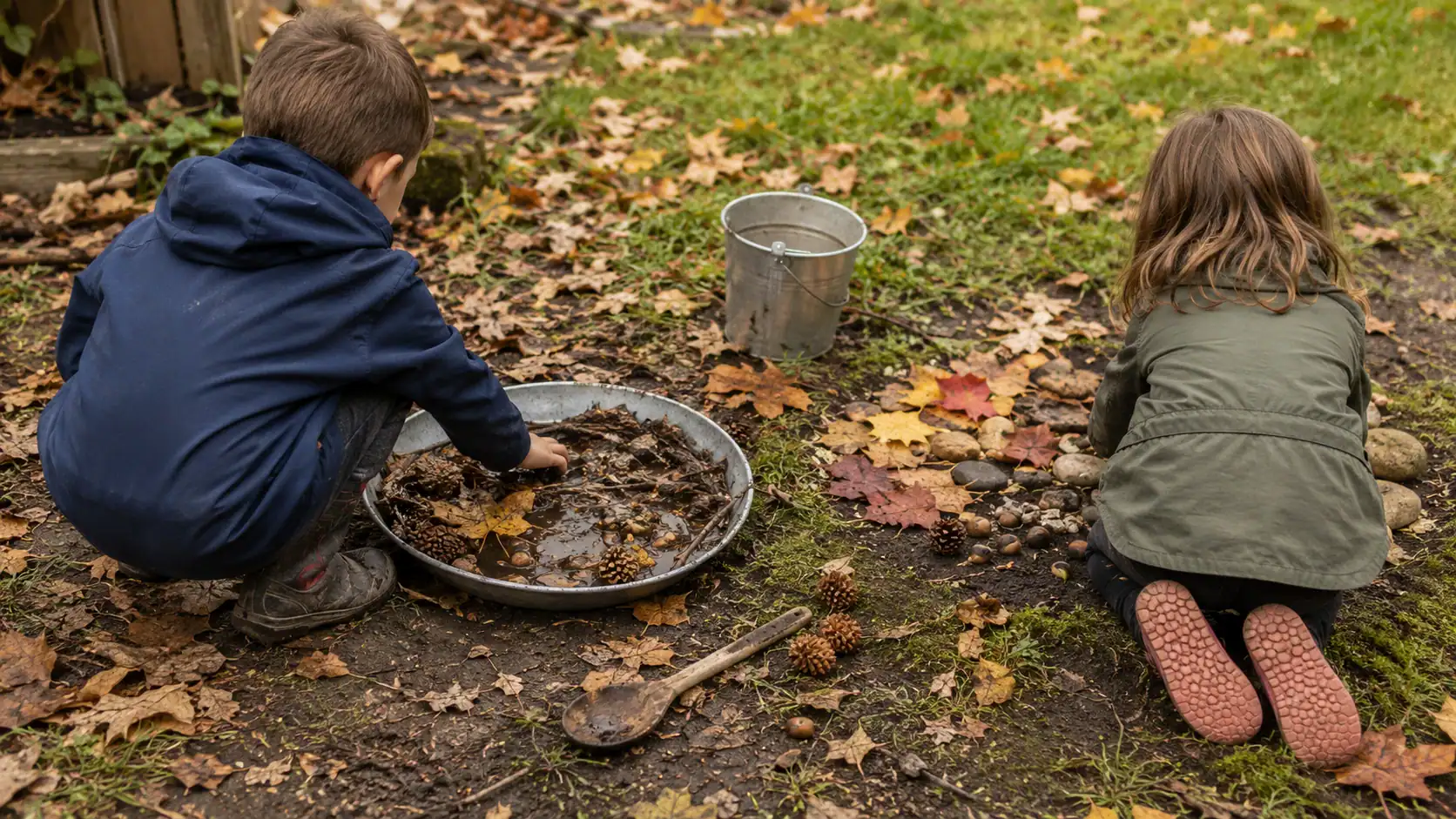
1. Make Fall Mud Soup
Add mud, water and fallen leaves to an old bowl.
Throw in a few acorns, sticks or seed pods.
Give kids a wooden spoon and let the recipe change as they play.
2. Paint With Mud
Mix soil with enough water to make a thin mud paint.
Use an old brush, stick or fingers to make marks on stones, pavement or scrap cardboard.
Try soil from two different places and compare the colors.
3. Make Muddy Leaf Prints
Press a fallen leaf into damp mud.
Lift it slowly and look at the pattern left behind.
Try a deeply veined leaf, a smooth one and a curled one.
4. Open a Tiny Mud Pie Bakery
Fill old muffin tins, yogurt pots or shallow containers with mud.
Decorate each mud pie with acorns, seed pods, leaves and sticks.
If this becomes the activity that keeps going all afternoon, these mud kitchen ideas for kids give you more easy ways to turn dirt, water and old kitchen tools into outdoor play.
5. Compare Wet and Dry Soil
Put dry soil in one container and damp soil in another.
Squeeze both.
Pour both.
Try making a ball with each one.
The difference is immediate.
6. Make an Autumn Pouring Station
Fill one bucket with rainwater or tap water.
Add cups, ladles, funnels and bowls.
Drop a few leaves into the water and see what floats.
7. Wash Acorns and Stones
Collect a few muddy acorns and smooth stones.
Add a bowl of water and an old toothbrush.
Wash each one and compare its color and texture before and after.
For younger children who still put objects in their mouths, use large stones and leaves instead of acorns.
8. Make a Fall Puddle Laboratory
After rain, take a cup, ruler and stick outside.
Measure a puddle.
Stir it.
Float a leaf.
Drop in a small stone.
Watch what happens.
If the weather is properly wet, these rain activities for kids have more puddle, mud and water play ideas.
9. Build a Tiny Leaf River
Make a shallow channel through loose soil or mud.
Pour water in at one end and send small leaves downstream.
Change the slope or block part of the channel with stones.
Then try again.
10. Paint Outside With Water
Take a bucket of water and a wide paintbrush outside.
Paint the fence, pavement, stones or a tree stump.
Watch the marks disappear as they dry.
Free Fall Sensory Activities With Leaves
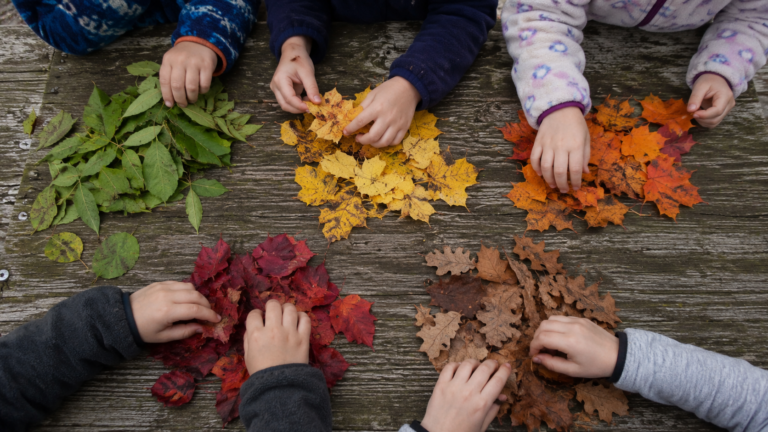
Fallen leaves are one of the easiest free sensory materials in fall. Kids can compare shape, smell, temperature and texture, then crunch, tear, sort, pile or move them. Dry leaves feel and sound completely different from wet ones, so the same activity changes naturally with the weather.
11. Make a Fall Texture Collection
Find five things:
- something smooth
- something rough
- something crunchy
- something soft
- something bumpy
Put all five together and compare them.
No supplies needed.
12. Go on a Crunchy Leaf Walk
Find the crunchiest patch of leaves you can.
Walk through slowly.
Then stomp.
Then shuffle.
Try the same thing with damp leaves and listen for the difference.
13. Make Leaf Confetti
Collect fallen leaves and tear them into smaller pieces.
Dry leaves crack and crumble.
Fresh leaves bend.
Wet leaves stick together.
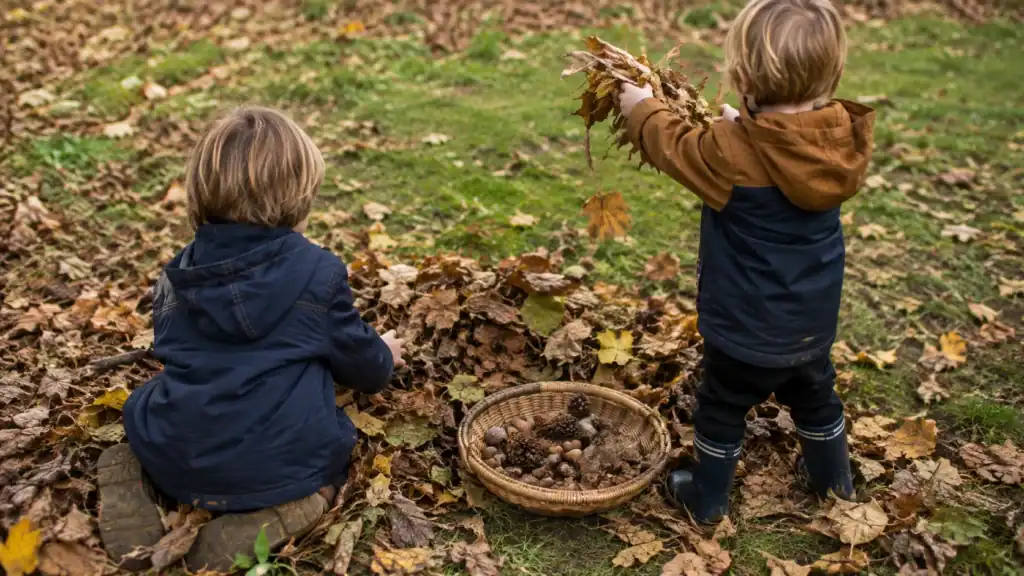
14. Sort Leaves Without Using Color
Color is the obvious way to sort autumn leaves.
Try something else.
Sort them by texture, size, edge shape, thickness or how bendy they feel.
For even more ways to use the same collection, try these 20 leaf activities for kids with easy crafts, nature games, sorting and fall sensory play.
15. Smell Fall Herbs
If you have familiar edible garden herbs such as rosemary, mint, sage or thyme, gently rub a leaf between two fingers.
Smell it.
Can kids describe the scent before naming the herb?
For more hands-on ways to use soil, plants and garden spaces, try these gardening activities for kids.
16. Make a Leaf Pile
Rake fallen leaves into a pile.
Carry them.
Drop them.
Throw them.
Listen to them.
Then build the pile again.
If you want to mix sensory play with pumpkin patches, cozy outdoor moments and simple family traditions, this fall bucket list for kids has 40 ideas for the whole season.
PICK ONE FROM EACH
1. FIND
Leaves, mud, acorns, bark, water or stones
2. NOTICE
Texture, smell, sound, weight or temperature
3. TRY
Sort it, pour it, stack it, mix it or listen to it
Nature Sensory Play With Acorns, Sticks and Stones
Acorns, sticks, stones, bark and seed pods work well for nature sensory play because every object is slightly different. Kids can compare weight, texture, sound, temperature and shape while sorting or building. Natural loose parts have no fixed purpose, so the same collection can become a sculpture, game or experiment.
17. Sort an Acorn Collection
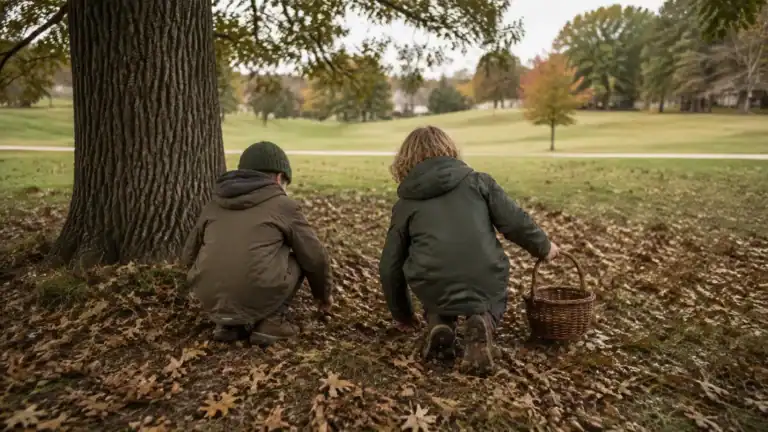
Gather a handful of fallen acorns. For more things to do with collected acorns, try cap matching, rolling experiments or temporary nature art.
Sort them into big and small.
Smooth and rough.
With caps and without caps.
Then invent another category.
For children who still mouth objects, swap the acorns for larger leaves, bark or big pine cones.
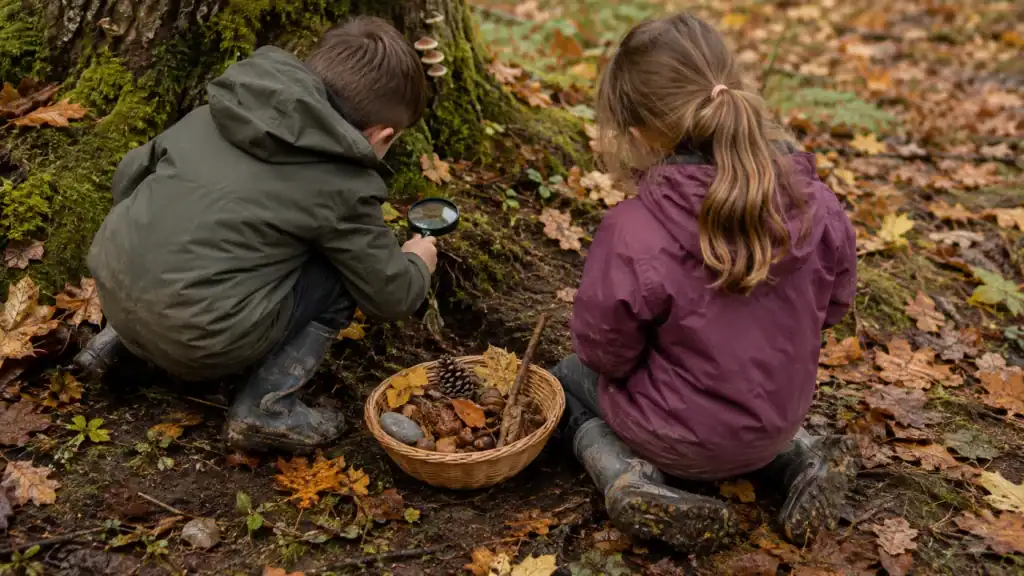
18. Go on a Fall Sensory Hunt
Instead of looking for named objects, hunt for sensations.
Find:
- something rough
- something smooth
- something cool
- something crunchy
- something that smells
- something tiny
- something that makes a sound
- something soft
A simple mission can make a familiar path feel completely different.
For more simple ways to explore what is already outside, try these easy nature activities for kids.
FREE FALL SENSORY HUNT
A fall nature scavenger hunt also works well when kids prefer having concrete things to find.
PRINT + GO
Fall Bucket List Printable
Want a few more simple reasons to head outside this fall? This printable fall bucket list gives kids a ready-made set of seasonal activities to try, with no extra planning needed.
Download the fall bucket list →19. Make Stick Music
Pick up two sturdy fallen sticks.
Tap them together.
Then test a tree stump, stone, metal bucket and fence.
Which makes the deepest sound?
Which makes the sharpest one?
20. Build a Nature Sculpture
Collect sticks, stones, leaves, bark and pine cones.
Arrange them flat on the ground or see how high they can be balanced.
There is no finished example to copy.
21. Compare Warm and Cool Stones
Find stones in sunlight and shade.
Touch both.
Then compare stones resting on dry soil, damp soil and grass.
Notice how much temperature can change within a small outdoor space.
Fall Sensory Activities With Sound, Wind and Movement
Sensory play is not only about touching messy materials. Wind, outdoor sounds, changing temperatures and movement all provide sensory information too. These fall activities work especially well for kids who prefer active play or who are less interested in handling mud, wet leaves or unfamiliar textures.
22. Take a Fall Listening Walk
Walk quietly for one minute.
Then stop.
What can everyone hear?
Leaves moving?
Birds?
Footsteps?
A branch tapping?
Traffic farther away?
Try the same route after rain and compare.
23. Chase the Wind
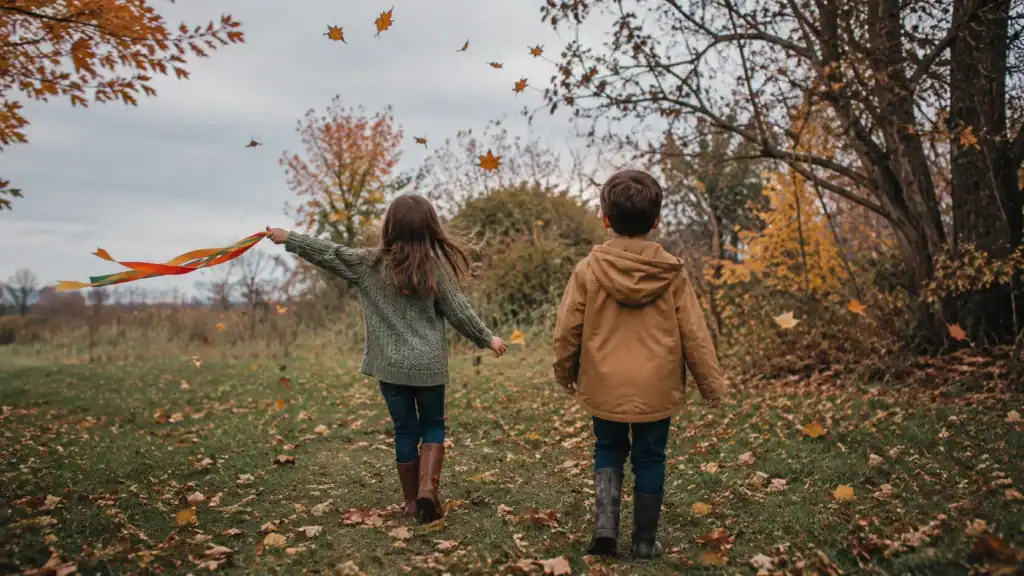
Take a lightweight ribbon or scarf outside on a breezy day.
Hold it up and watch where it moves.
Walk with the wind.
Turn around.
Try moving against it.
Head Start specifically suggests materials such as ribbons, scarves and bubbles as simple ways to help children observe windy weather.
24. Make a Simple Texture Path
On a safe, clean surface, create a short route using familiar textures.
Try grass, a towel, smooth paving and a shallow tray of clean water.
Kids can explore it with feet or hands.
Skip anything sharp, irritating or unknown.
25. Go Outside After Rain
Fall after rain feels completely different.
Touch wet bark.
Listen to water dripping from leaves.
Find shiny stones.
Feel the cooler air.
Watch what happens when a dry leaf lands in a puddle.
For a full wet-weather list, save these rain activities for kids too.
How Do You Keep Fall Sensory Play Safe?
Keep fall sensory play age appropriate and stay close around water. Small acorns, stones and seed pods are not suitable for children who still put objects in their mouths. Avoid unknown berries, mushrooms and plants, wash hands after soil play, and use familiar materials when children are likely to touch their faces or mouths.
Natural materials still need a quick common-sense check.
The American Academy of Pediatrics advises keeping small choking hazards away from young children. It also warns against water beads, which can expand dramatically if swallowed and cause serious internal injuries.
For outdoor plant finds, stick to looking when you cannot confidently identify something.
Some berries and wild mushrooms can be poisonous.
Use clean containers for water play and empty buckets or tubs when the activity ends.
GOOD TO KNOW
Keep sensory materials age appropriate. Use larger natural finds for children who still mouth objects, stay close around water, leave unknown berries and mushrooms alone, and skip water beads entirely.
Frequently Asked Questions About Fall Sensory Activities for Kids
Fall sensory activities can be as simple as touching leaves, mixing mud, listening to wind or sorting natural finds. Most can be done free with materials already outside. The best activity depends more on a child’s age and interests than on having a prepared sensory setup.
What are some easy fall sensory activities for kids?
Try crunching leaves, mixing mud, washing stones, smelling herbs, sorting nature finds, listening to wind or floating leaves in puddles. Most use materials already outside.
What are free fall sensory activities?
Fallen leaves, mud, sticks, bark, acorns, stones, rainwater and wind can all become free sensory materials. Kids can sort, pour, smell, listen, stack or compare them.
What fall sensory activities are good for toddlers?
Toddlers can crunch leaves, pour water, touch grass, make mud marks and explore large sticks or leaves. Avoid small natural objects if they still put things in their mouths.
Does sensory play have to be messy?
No. Listening walks, wind play, leaf sorting, herb smelling and comparing smooth and rough natural objects all provide sensory experiences without messy hands.
What can I put in a fall sensory bin?
Try large leaves, pine cones, sticks, bark and familiar safe herbs. Outdoor sensory play can also skip the bin completely and use materials where kids find them.
Can kids do sensory activities outside when it rains?
Yes. Rain creates puddles, wet leaves, dripping branches, soft mud and new outdoor sounds. With suitable clothing and close water supervision, it adds plenty to sensory play.
What if my child does not like messy sensory play?
Start with dry or low-contact activities such as listening walks, wind play, smooth stones or leaf sorting. Tools such as spoons can also reduce direct contact with unfamiliar textures.
Keep Fall Sensory Play Simple
The easiest fall sensory activities for kids often start with whatever the season has already dropped on the ground.
A handful of leaves.
A puddle.
A muddy patch.
A windy afternoon.
Five quiet minutes listening outside.
Pick one idea and see where it goes.
For another low-prep day close to home, try these 30 free backyard activities for kids.
Or keep the seasonal ideas going with these fall outdoor activities for kids.
KEEP EXPLORING